
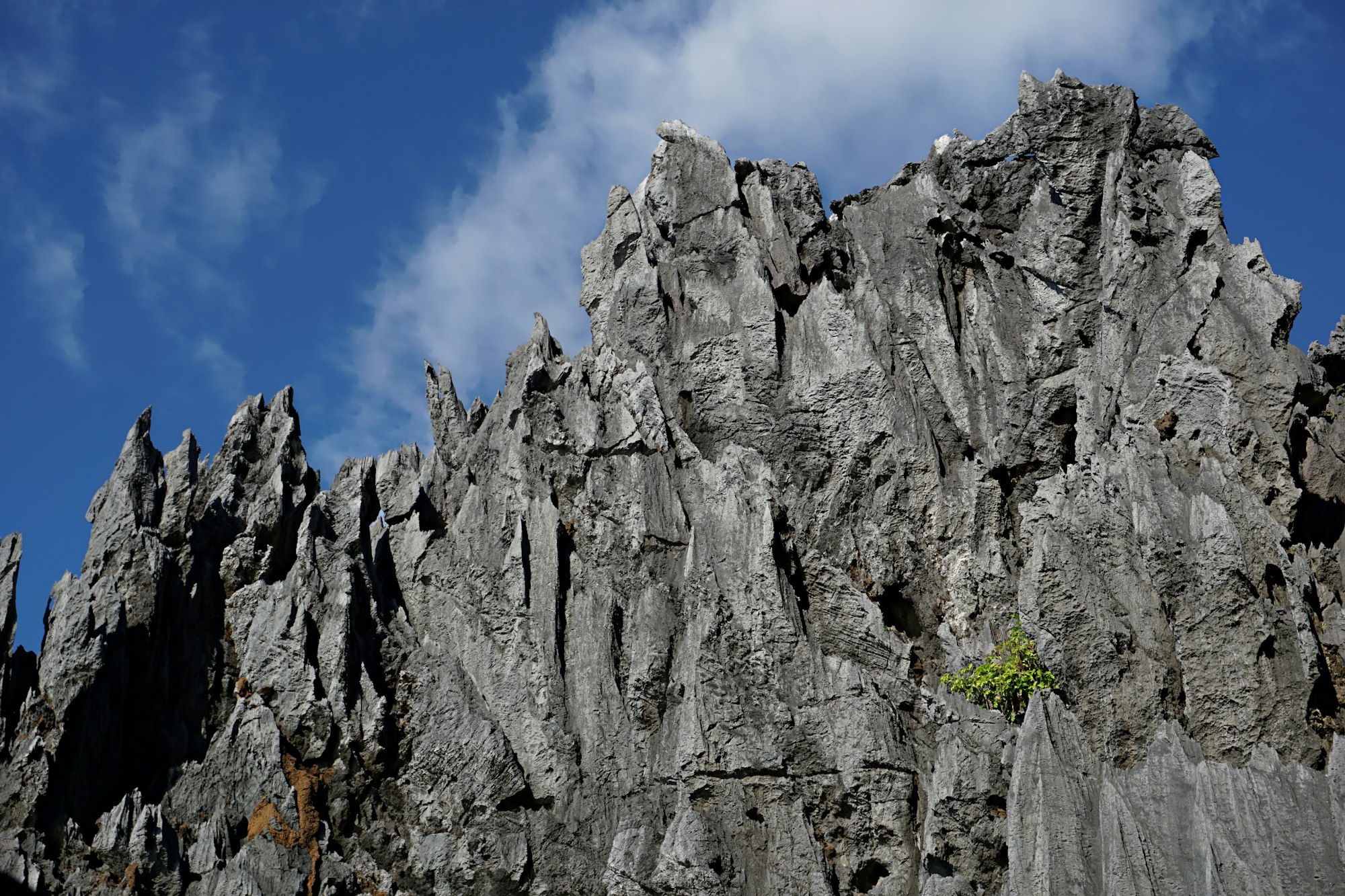
Most people find Ugong Rock Puerto Princesa by accident. You book the Underground River, the operator mentions a side trip, and suddenly you’re standing in a rice field an hour and a half north of the city looking up at a lump of limestone wondering what you signed up for. That was us in 2019, sweating through a shirt at nine in the morning. And honestly? It ended up being the part of the day everyone talked about on the van ride home.
Here’s the thing nobody tells you upfront: this is not a gentle walk-through cave. You climb up through the inside of the rock, squeeze through gaps, haul yourself up ladders, and come out on a platform at the top with the whole Tagabinet valley spread out below you. Then, if you want, you fly back down on a cable.
This guide covers what it actually costs in 2026, how to get there without overpaying, what the climb demands from your knees, and the honest answer to whether it’s worth adding to your Puerto Princesa itinerary.
What Exactly Is Ugong Rock?
Ugong Rock is a limestone outcrop sitting in the middle of farmland in Barangay Tagabinet, part of Puerto Princesa City. Locals put its height at around 75 feet, and it’s part of the same ancient karst system that produced the caves further north, formations geologists date back millions of years.
The name comes from sound. Tap the hollow stalactites inside the cave and they ring, a low resonating hum the locals call “ugong.” Our guide spent a solid five minutes drumming out a rhythm on the formations while our group stood there grinning like kids. Is it a gimmick? A little. But it’s a good one, and it’s the reason the place has the name it has.
What makes it different from most Palawan attractions is who runs it. Ugong Rock is a community-based tourism site managed by the Tagabinet Ugong Rock Multipurpose Cooperative, meaning the guides, the ticket staff and the safety crew are all people from the barangay, and the money stays there. Your guide grew up in the village below the rock. That’s not a marketing line, it’s just how the site is structured.
Insider tip: ask your guide about the farming season while you climb. Half of them work the paddies when they’re not guiding, and the view from the top makes a lot more sense once someone explains what you’re looking at.
Where It Is and How to Get There
Barangay Tagabinet sits on the national highway heading toward Sabang, roughly an hour and twenty minutes from the Puerto Princesa city proper according to the official city tourism office. It’s directly on the Underground River route, which is exactly why almost everyone visits it as a side trip rather than a standalone day out.
You have three realistic options.
Shared van or jeepney to Sabang. From the San Jose terminal, take anything bound for Sabang and ask to be dropped at Tagabinet. Expect roughly ₱130 to ₱150 per person. It’s the cheapest way in, but you’ll need to flag down a passing van to get back, and the last ones thin out by mid-afternoon.
Private van hire. Around ₱3,000 to ₱3,500 for a van holding ten to twelve people, so it works out cheap if you’re a group. Several operators throw the transfer in free when you book it alongside the Underground River tour, so always ask before paying separately.
Bundled with an Underground River tour. The most common route by far. Your operator handles the pickup, the permits and the schedule, and Ugong Rock slots in either before or after the boat trip. If you’re already planning the river, this is the low-effort choice.
Insider tip: do Ugong Rock on the way back from Sabang, not on the way out. The Underground River runs on timed permits and you cannot be late for yours. Caving first means every minute in the cave is a minute you’re anxious about the clock.
Ugong Rock Prices in 2026
Rates are set by the cooperative and have crept up over the years, so treat these as current best figures rather than carved in stone. Bring cash. There’s no card machine in a rice field.
| Activity | Approximate 2026 rate | What it covers |
|---|---|---|
| Caving / spelunking only | around ₱300 per person | Guide, harness, climb to the summit, walk back down |
| Caving + sitting zipline | around ₱550 per person | The climb plus the standard seated ride down |
| Caving + superman zipline | around ₱650 per person | The climb plus the face-down harness ride |
| Private van from Puerto Princesa | ₱3,000 to ₱3,500 per van | Round trip, 10 to 12 seats, often free with a UR tour |
| Shared van or jeepney | ₱130 to ₱150 per person | One way, drop-off at Tagabinet on the Sabang road |
| Puerto Princesa environmental fee | around ₱150, paid once | Covers your whole stay in the city, keep the receipt |
Compared to the rest of a Palawan trip, this is small money. For where it fits in a wider budget, our breakdown of what a Palawan trip actually costs puts the numbers side by side.
Insider tip: decide on the zipline at registration, not at the top. The cooperative takes your choice when you buy the ticket, and changing your mind after the climb means walking back down to the desk. Half our group regretted saying no once they heard the whooping from the platform.
What the Climb Is Actually Like
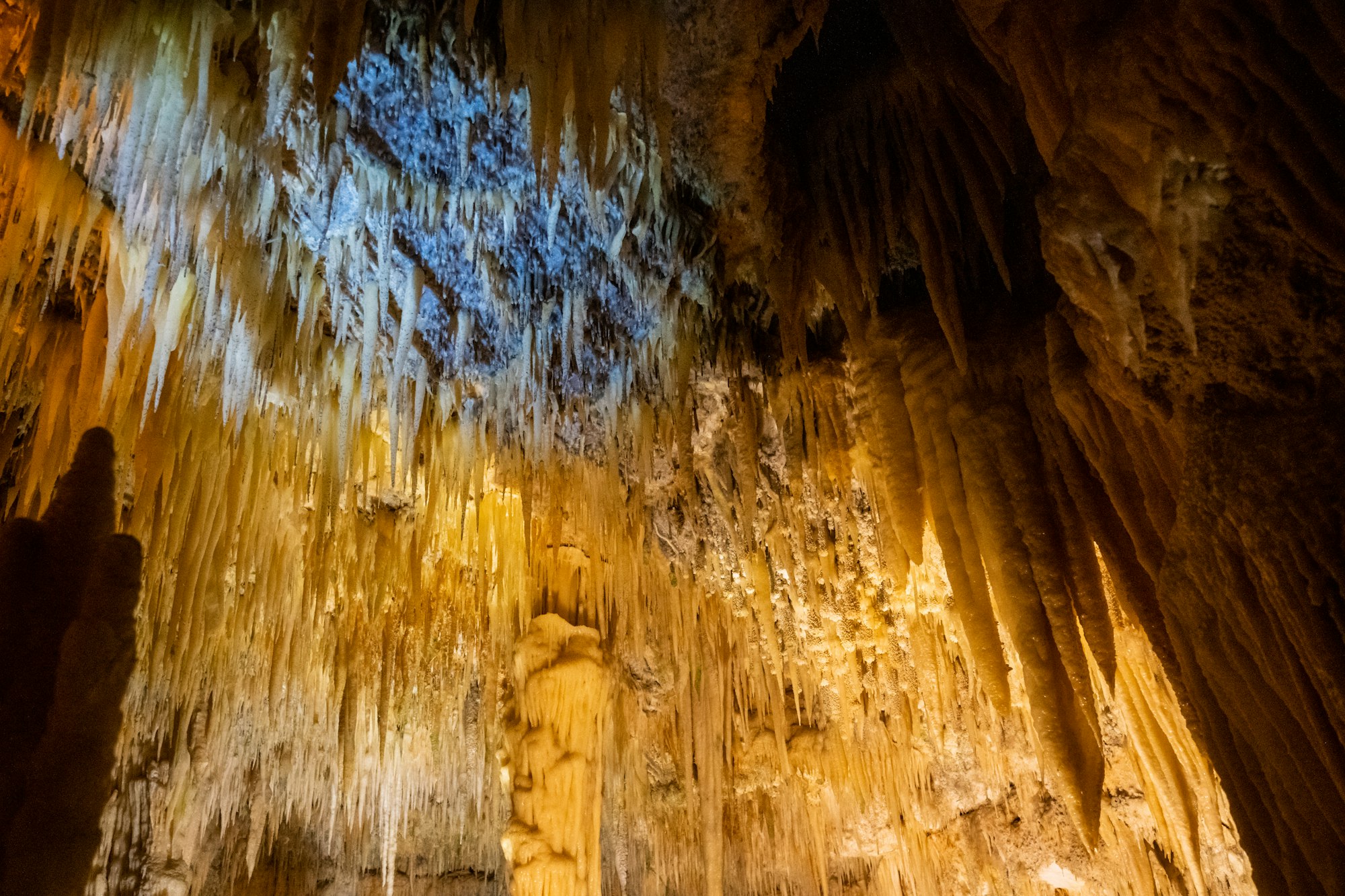
You start at the base with a harness, a helmet and a guide who does a short safety briefing. Some of them open with a prayer. Then you go in.
The route runs up through the inside of the rock rather than around it, which is the whole appeal. There are fixed ladders, ropes, and steel rungs bolted into the limestone at the tighter sections. A few passages are genuinely narrow, the sort where you turn your shoulders sideways and shuffle. Nothing requires climbing experience, but if you’re carrying a bit of extra width or you don’t love enclosed spaces, you’ll know about it.
Reckon on 30 to 45 minutes to the top depending on your group’s pace, and about an hour to an hour and a half for the whole visit including the zipline. It’s cooler inside than out, though not by much, and you will sweat.
Then you pop out at the summit platform and it’s all worth it. Karst hills in one direction, green paddy fields and the barangay in the other, and usually a breeze that feels like a reward. It’s a modest view by Palawan standards, no turquoise water in sight, but you earned it with your hands and knees and that changes how it lands.
Insider tip: take a bottle of water in with you and leave the daypack in the van. There’s nowhere to put a bag in the tight sections and your guide will end up carrying it.
The Zipline: Sitting or Superman?
The zipline was added in the early 2010s after visitors kept asking for a faster way down, and it’s now the main draw for a lot of people. Operators list the cable at around 71 metres from the summit platform, and the ride is over in well under a minute. The site’s own marketing calls it among the fastest in the country. Take that how you like, but it moves.
Two positions. The sitting one is a normal upright seated harness, feet dangling, hands free for a photo. Comfortable, low drama, fine for kids and for anyone who wants the view without the adrenaline.
The superman is face down, suspended from the back, arms out. You get the ground rushing past underneath you, which is either the best part of your day or a firm no. There’s no wrong answer here. Our group split roughly down the middle and everyone was happy with their choice.
And if you skip the zipline entirely? You walk back down the outside of the rock on a proper staircase. It takes maybe ten minutes and there’s no shame in it.
Insider tip: the staff will offer to take photos with your phone at the launch platform. Hand it over with the strap on and let them. You will not be getting your own phone out mid-flight.
Pairing It With the Underground River
Ninety percent of visitors combine Ugong Rock with the Puerto Princesa Subterranean River, and it’s the right call. The river is a UNESCO World Heritage Site and needs a permit arranged in advance, so it anchors your day. Ugong Rock fills the gap around the boat schedule.
A typical combined day looks like this: pickup between 7am and 8am, roughly two hours to Sabang, the river tour and lunch, then Ugong Rock on the drive back, home by late afternoon. Operators bundling both tend to charge somewhere around ₱2,500 for the river with lunch plus the Ugong Rock activity fee on top. Our full Underground River guide walks through the permit system, which is the part that trips people up.
Could you do both plus a city tour in one day? No. Don’t try. If you have a second day in the capital, the city tour circuit or a boat day at Honda Bay makes a better pairing, and the Iwahig firefly tour is an easy evening add-on because it only runs after dark.
What to Wear and Bring
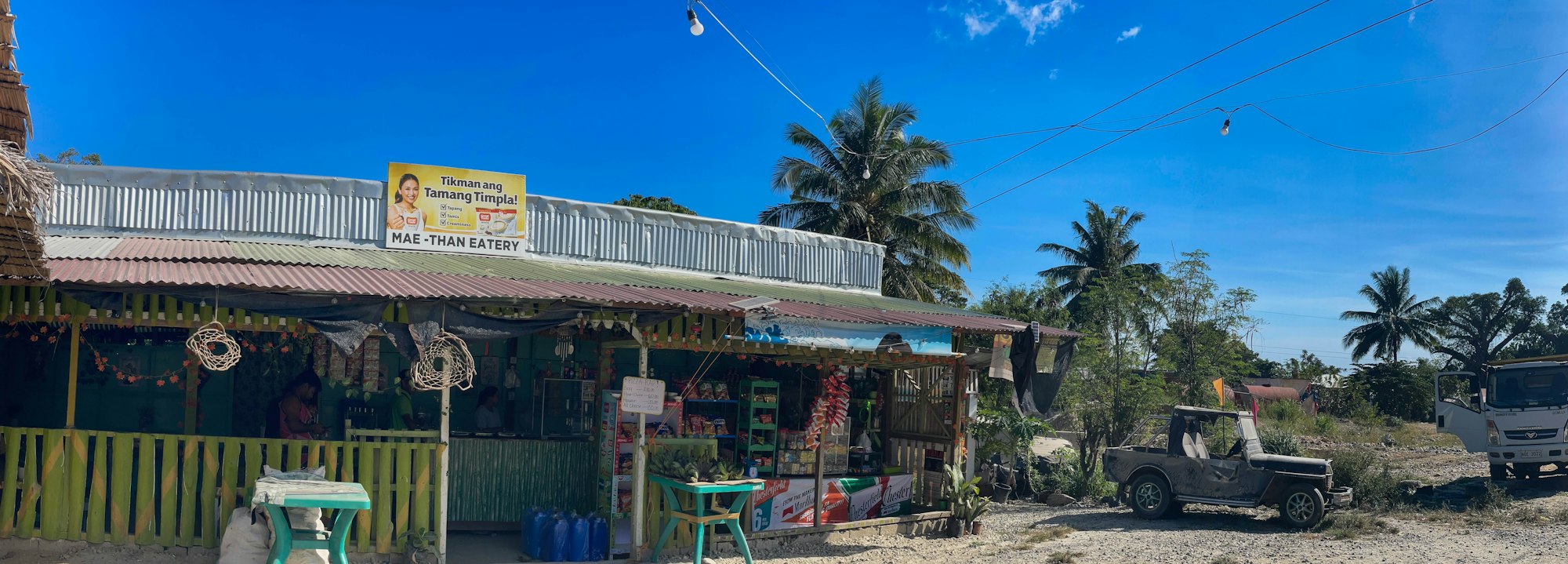
This is the section people skip and then regret. You’re crawling through rock.
- Closed shoes with grip. Trainers or trail shoes. The city tourism page says slippers are fine and technically you’ll be allowed in, but the limestone is polished slick in places. Wear real shoes.
- Clothes you don’t mind ruining. Cave mud does not fully come out. Shorts and a t-shirt are standard.
- Gloves if you have them. Not required, and not provided as standard, but your palms will thank you on the rope sections.
- Water. One bottle each, minimum.
- Cash in small notes. No cards, and change can be tight in the morning.
- A phone strap or zip pocket. Loose phones fall out of shirt pockets in tight passages. Ask anyone who guides there.
Leave the good camera behind. Our full Palawan packing list covers the rest of the trip, but for this specific stop, less is better.
Insider tip: if you’re doing the Underground River the same day, pack a spare shirt in the van. Sitting in a wet, muddy top for the two-hour drive back is a small misery that’s completely avoidable.
Best Time of Day and Year to Visit
The site generally runs from about 8am to 4pm daily, and the last climb goes up well before closing, so don’t roll in at half three expecting to be let up.
Morning is better. The cave is cooler, the rock is drier and you’re not queuing behind three tour vans. By eleven the place fills up with the Underground River crowd coming back through.
Season matters less than you’d think, because you’re indoors for most of it. Peak dry season runs November through May and that’s when Palawan is busiest and the roads are easiest. During the wet months, June to October, the cave gets slippery and the guides move groups more slowly, but they rarely close. Heavy rain or a storm warning is the exception, and worth checking against PAGASA the night before if the weather looks unsettled. If you’re still choosing dates, our guide on the best time to visit Palawan lays out the trade-offs month by month.
Who Should Skip Ugong Rock
Let’s be fair about this, because a bad recommendation costs you a morning.
Skip it if you’re strongly claustrophobic. Some of the passages are properly tight and there’s no shortcut out of the middle. Skip it if you have knee, back or shoulder problems, because there’s real bending, hauling and awkward footing involved. Skip it if you’re travelling with very young children or anyone unsteady on their feet.
Everyone else? It’s an hour and a half and around ₱550, it directly funds a village cooperative, and it’s the only place in Palawan where you climb inside a rock and fly off the top of it. For a side trip on a day you were already driving that road, that’s a solid deal. If you’re weighing up whether the capital is worth your time at all, we tackled that honestly in is Puerto Princesa worth visiting.
Ugong Rock Puerto Princesa FAQ
How much does Ugong Rock cost in 2026?
Roughly ₱300 for the caving only, around ₱550 with the sitting zipline and around ₱650 with the superman zipline. Rates are set by the local cooperative and paid in cash on arrival.
How long does the Ugong Rock tour take?
About an hour to an hour and a half in total. The climb to the summit takes 30 to 45 minutes depending on your group, and the zipline down is over in under a minute.
How far is Ugong Rock from Puerto Princesa?
Around an hour and twenty minutes by road, in Barangay Tagabinet on the highway toward Sabang. It sits directly on the Underground River route.
Is Ugong Rock safe?
Yes, with the usual caveats. You wear a helmet and harness, guides are trained by the cooperative and the tight sections have fixed ladders and ropes. The main risks are slips on wet limestone and knocked knees, not falls.
Can kids do Ugong Rock?
Older children who are steady on their feet manage it fine and usually love the zipline. Toddlers and very young kids are not a good fit for the climb.
Do I need to book Ugong Rock in advance?
Not usually. Walk-ins are accepted during opening hours, and if you’re on a bundled Underground River tour your operator handles it. During Holy Week and the Christmas period it can get busy, so going early in the day helps.
Is the zipline worth the extra money?
For most people, yes. The difference is a couple of hundred pesos and it’s the fastest, most memorable part of the visit. If heights genuinely bother you, the walk down the staircase is perfectly fine.
Book Your Puerto Princesa Adventure With a Local Team
CMT Ticketing and Services is a Palawan-based operator, and we arrange Underground River permits, Ugong Rock side trips, airport transfers and van hire across the province, plus island hopping up in El Nido. Message us on Facebook Messenger or WhatsApp and we’ll build the day around your flight times.
See our full Palawan travel packages or El Nido island hopping tours, and send us a message to lock in your Ugong Rock Puerto Princesa trip. GCash accepted, same-day confirmation.