

El Nido vs Port Barton 2026: Which Should You Visit in Palawan?
So you’ve narrowed your Palawan trip down to two names: El Nido and Port Barton. Maybe a friend who backpacked through Palawan told you Port Barton is “the real deal,” while every travel blog and Instagram feed is screaming El Nido at you. Honestly, we get this question constantly on Facebook Messenger, usually from travelers building their first Palawan itinerary and trying not to waste a single day of it.
Here’s the thing: El Nido vs Port Barton isn’t really an either-or question for most people, but if you can only pick one, or you’re trying to figure out which one deserves more nights, the answer depends on what kind of trip you actually want. This guide breaks down both destinations honestly, what they cost, what they feel like on the ground, and which one fits your travel style, so you’re not guessing.
El Nido vs Port Barton at a Glance
If you want the short version before reading further, here it is.
| El Nido | Port Barton | |
|---|---|---|
| Vibe | Busy, iconic, built up | Quiet, laid-back, low-key |
| Island hopping cost (shared) | Approximately ₱1,200 to ₱1,500 per person | Approximately ₱1,500 to ₱1,800 per person |
| Accommodation (per night) | Approximately ₱1,000 to ₱3,500+ | Approximately ₱500 to ₱2,500 |
| Crowds | High, especially Nov to Apr | Low, even in peak months |
| Access | Lio Airport (AirSWIFT) or overland via Puerto Princesa | Overland only, roughly 3.5 to 5 hours by van from El Nido or Puerto Princesa |
| Best for | First-timers, iconic lagoons, more nightlife and dining options | Budget travelers, quiet pace, manta rays, repeat visitors |
Insider tip: if you’re only doing a short trip (4 days or less), pick one and go deep rather than splitting your time and rushing both. Port Barton especially punishes a one-night stopover, since half of it is just travel.
What El Nido Is Like in 2026
El Nido is the name most people already know, and there’s a reason for that. Bacuit Bay’s limestone cliffs and hidden lagoons are genuinely some of the most dramatic scenery in the Philippines. The town itself has grown fast though. Recent regional tourism figures put El Nido’s annual visitor numbers at roughly half a million in a single year, which is something like ten times the size of the local population.
That growth shows up in daily life: Small Lagoon now runs a queue system during peak hours, and boats can stack up at Big Lagoon’s entrance by mid-morning in high season. None of that makes El Nido not worth it. It’s still spectacular. But it’s a different kind of trip than it was a decade ago.
You’ll find the widest range of restaurants and beach bars in the region here, along with the most flight options. AirSWIFT flies directly into El Nido’s own Lio Airport, which cuts out the long overland transfer entirely if your budget allows it.
Island hopping runs on four standardized routes, Tour A, B, C, and D, each covering a different set of lagoons, beaches, and snorkeling spots. Shared boats run approximately ₱1,200 to ₱1,500 per person, though that price typically doesn’t include the mandatory Environmental/Tourism Development Fee (ETDF), roughly ₱400 per visitor, paid once and covering your whole stay, plus small per-lagoon entrance fees on some routes. Private charters run higher but split well across a group of four or more.
Insider tip: book the earliest island hopping slot you can, ideally departing before 8:30am. Small Lagoon and Secret Beach both get noticeably more crowded after 10am once multiple operators arrive at once.

What Port Barton Is Like in 2026
Port Barton sits on Palawan’s west coast, part of the municipality of San Vicente, roughly halfway between El Nido and Puerto Princesa. And honestly, it still feels like a fishing village that happens to have some guesthouses, not a resort town. When we brought a group there last season, our boatman cut the engine near one of the outer islands and for a good ten minutes there wasn’t another boat within sight. Try getting that at Small Lagoon in April.
The island hopping here covers Twin Reef, a handful of beach stops like German Island and Exotic Island, a turtle feeding ground, and (season permitting, roughly November through May) a real chance at spotting wild manta rays passing through the outer channel. Shared tours run approximately ₱1,500 to ₱1,800 per person, which usually bundles in the ₱200 per-person eco-tourism fee collected at the pier, though some operators still charge it separately, so it’s worth asking upfront.
Accommodation is noticeably cheaper too. A fan-cooled room in a family-run guesthouse runs around ₱500 to ₱800 a night, while a beachfront cottage with air conditioning lands closer to ₱1,500 to ₱2,500. There’s no ATM in town (bring cash from El Nido or Puerto Princesa), and power in some guesthouses still runs on generator or solar rather than full-time grid electricity. San Vicente does technically have its own small airport, open since 2018, but commercial flight service has been inconsistent over the years, so almost everyone still arrives overland.
Insider tip: ask your boatman about recent manta ray sightings first thing in the morning. Local boat crews talk to each other constantly and usually know which channel to check that day.

Price Comparison: El Nido vs Port Barton
Here’s how the day-to-day costs actually stack up, based on standard shared-boat rates and typical accommodation.
| Expense | El Nido | Port Barton |
|---|---|---|
| Island hopping (shared, per person) | ₱1,200–₱1,500 | ₱1,500–₱1,800 |
| Private boat charter (per boat, full day) | ₱5,000–₱8,000 | Approximately ₱3,500–₱4,000 |
| Budget accommodation (per night) | ₱1,000–₱1,500 | ₱500–₱800 |
| Mid-range accommodation (per night) | ₱2,000–₱3,500 | ₱1,500–₱2,500 |
| Simple restaurant meal | ₱200–₱400 | ₱200–₱350 |
Port Barton’s private charter rate actually undercuts El Nido’s shared rate once you’re splitting it across three or four people, which surprises a lot of first-time travelers. For a deeper breakdown of what a full Palawan trip runs across both budget and mid-range travel, our Palawan trip cost guide walks through daily numbers for flights, food, and transport too.
Which One Should First-Time Visitors Choose?
If this is your first trip to Palawan, El Nido should be the anchor. Small Lagoon, Big Lagoon, and Secret Beach are the images most people picture when they imagine Palawan, and they earn the hype even with the crowds. The infrastructure is also just easier for a first-timer: more flight options, more accommodation choices at every price point, and tour operators used to handling first-time travelers who don’t yet know what to ask for.
That doesn’t mean skip Port Barton. It means don’t make it your only stop if this is your first and possibly only Palawan trip. Do El Nido first, then decide if you have time to add Port Barton on afterward. Our El Nido vs Coron comparison is worth a read too if you’re still deciding how to split your days across the whole province.
Insider tip: don’t try to cram El Nido’s Tour A through D into two days just to “see everything.” Pick two tours based on what you actually want (lagoons versus hidden coves versus snorkeling) and give yourself a slower afternoon in between.
Who Should Prioritize Port Barton Instead?
Port Barton makes the most sense for a specific type of traveler: budget-conscious, already been to El Nido or Coron once before, or genuinely tired of checklist tourism. If you’ve done the lagoon circuit already and want a second Palawan trip that feels different, this is where you go. It’s also the better call if you’re building a longer overland route between Puerto Princesa and El Nido anyway, since Port Barton sits almost exactly at the midpoint and breaks up what would otherwise be a rough 5 to 6-hour van ride in one sitting.
Is Port Barton “better” than El Nido? Not exactly, it’s just solving a different problem. If the idea of Palawan you had in your head before Instagram got involved (quiet water, no queue systems, negotiable boat rates) sounds more appealing than ticking off famous lagoons, Port Barton wins for you. Our full Port Barton travel guide and our reasons to visit Port Barton both go deeper into what a few days there actually looks like day to day.
Can You Visit Both? Building Them Into One Trip
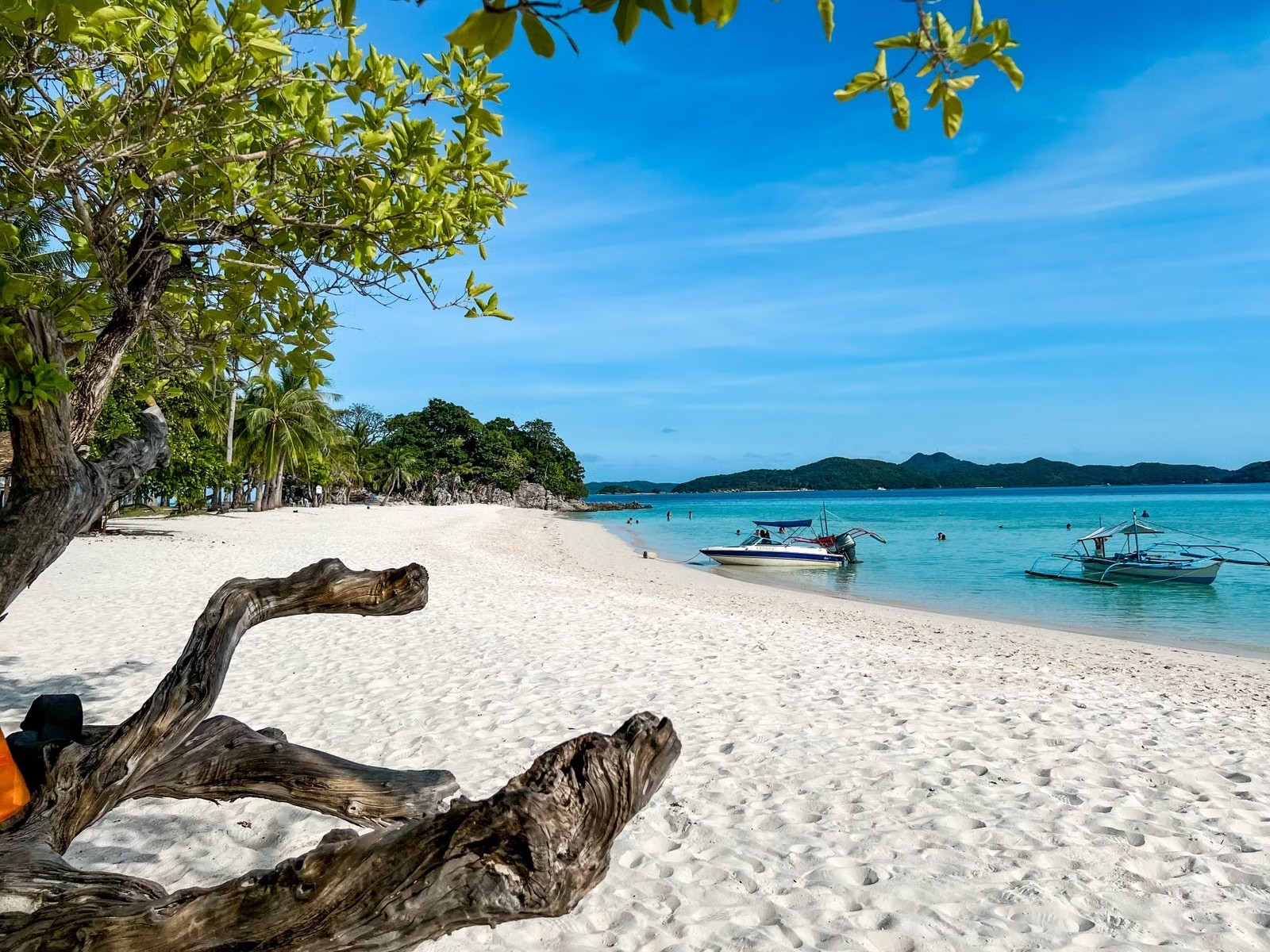
Yes, and honestly, this is what a lot of our repeat guests end up doing. Depending on the route your van takes, El Nido and Port Barton sit roughly 145 to 185 km apart by road, a 3.5 to 5-hour ride either direction, with several operators running direct shared vans daily during peak season. Most travelers slot Port Barton in as a stopover between El Nido and Puerto Princesa rather than a separate detour, which avoids doing the full overland route in one exhausting sitting.
A common pattern looks like this: 3 to 4 nights in El Nido for the island hopping tours, then 2 nights in Port Barton on the way to or from Puerto Princesa. If you’re mapping out a longer trip, our 5-day Palawan itinerary leans El Nido-heavy, while a 7-day Palawan itinerary has enough room to comfortably fit both without feeling rushed. Two nights is really the minimum for Port Barton, since one night means you’ll spend more time in transit than actually enjoying the place.
Insider tip: if you’re doing both, do El Nido first while your energy is high for the earlier wake-up tour departures, then let Port Barton be the slower, decompress-a-bit half of the trip.

Best Time to Visit Either Destination
November through May is the dry season across this part of Palawan, and it’s the better window for both destinations: calmer seas, more reliable island hopping, and fewer canceled boat trips. According to PAGASA, the wetter southwest monsoon typically peaks between July and September across the region, so June through October brings a real chance of rain and rougher water, especially in Port Barton where boats are smaller and routes more exposed.
That said, both places are still doable in the off-season if you build in flexibility rather than a packed back-to-back schedule. Palawan overall remains one of the Department of Tourism’s priority growth destinations, so both towns keep investing in infrastructure year over year, which is worth knowing if you’re weighing visit now versus visit later.
Frequently Asked Questions
Is El Nido or Port Barton better for a first Palawan trip?
El Nido, for most first-timers. It has the iconic lagoons, more flight options, and infrastructure built for travelers who don’t yet know the region. Add Port Barton afterward if your schedule allows.
Is Port Barton cheaper than El Nido?
Yes, noticeably. Accommodation and private boat charters both run lower in Port Barton, often by close to half, though shared island hopping tours are actually a bit higher per person in Port Barton due to smaller group sizes.
How far is Port Barton from El Nido?
Roughly 145 to 185 km by road depending on the route, which works out to a 3.5 to 5-hour van ride. Several operators run direct shared vans daily.
Can I see manta rays in Port Barton?
It’s possible but not guaranteed, generally more likely between November and May in the channel near Port Barton’s outer islands. It’s a wild sighting, not a paid excursion.
Is Port Barton too remote for first-time travelers?
Not really. It’s more low-key than genuinely remote, and van transfers can be arranged directly. Just bring cash, since there’s no ATM in town, and expect patchy mobile data.
Should I visit both El Nido and Port Barton on the same trip?
If you have 5 or more days, yes. Port Barton works well as a stopover between El Nido and Puerto Princesa rather than a separate detour, so you’re not adding a huge amount of extra travel time.
Does CMT arrange tours and transfers to both destinations?
Yes. We coordinate island hopping and van transfers for El Nido and can help arrange your route through Port Barton as part of a broader Palawan itinerary. Message us on Facebook with your travel dates.
Ready to Plan Your Route?
Whether you’re picking El Nido, Port Barton, or both, the earlier you lock in your island hopping and transfers, the better your dates and prices look. Check out our El Nido island hopping tours and message CMT Ticketing and Services on Facebook to build the El Nido vs Port Barton decision into an actual itinerary.
[…] if you’re still deciding whether to bother with both towns, our El Nido vs Port Barton comparison lays out who should skip […]
[…] you’re comparing destinations before you commit, our El Nido vs Port Barton comparison covers the trade-offs properly. For the food scene in the other two towns, see our best […]