

How to Get to Port Barton Palawan 2026: Every Route, Price & Travel Time
So you’ve seen the photos, you’ve read that Port Barton is the quiet version of El Nido, and now you’re trying to work out the boring part: how to get to Port Barton without losing a full day of your trip. Honestly, this is the single most common question we get on Facebook Messenger about this town, usually right after someone books their flight to Puerto Princesa and realises Port Barton isn’t exactly next door.
Here’s the thing. Port Barton is genuinely easy to reach. It just isn’t obvious, because there’s no airport in town, no ferry terminal with a ticket counter, and the useful information is scattered across a dozen forums that were last updated years ago. So let’s fix that. This guide covers every real route into Port Barton in 2026, what each one costs in pesos, how long it actually takes, and which option we recommend to our own customers depending on where they’re coming from.
Where Is Port Barton, Exactly?
Port Barton is a small coastal barangay in the municipality of San Vicente, on the western side of Palawan. It sits roughly halfway between Puerto Princesa and El Nido, which is the key thing to understand before you plan anything. That midpoint position is why Port Barton works so beautifully as a stopover rather than a separate trip.
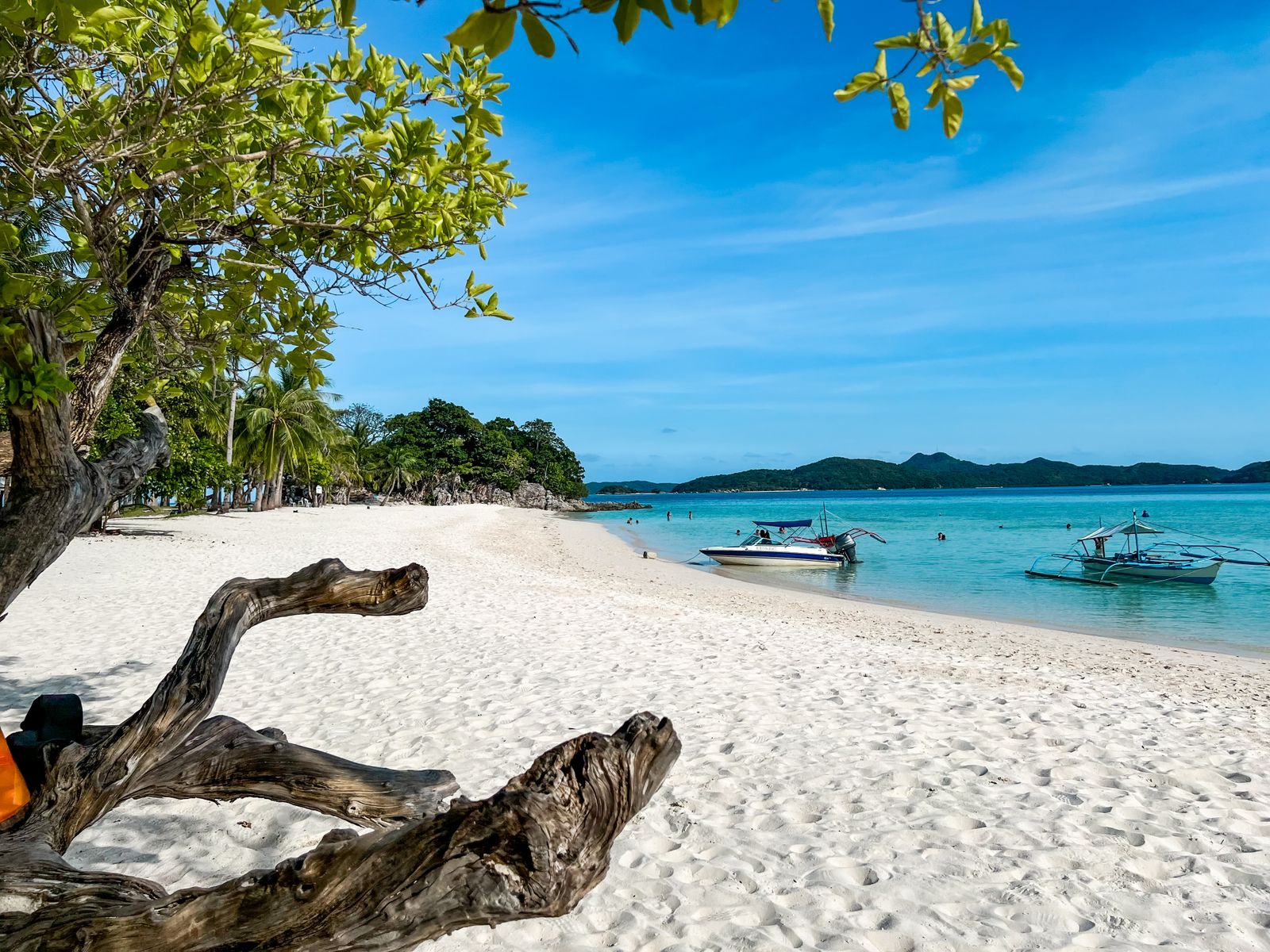
The town itself is tiny. One brown-sand bay, a handful of dirt roads, a line of bangka boats pulled up on the beach, and guesthouses tucked behind the palms. There’s no ATM you should rely on, and the power supply has historically been limited outside certain hours, though many resorts run generators. If you want the full picture of what’s waiting for you, our complete Port Barton travel guide covers the town itself in detail.
Insider tip: bring enough cash for your whole stay. Port Barton has very limited banking, and card acceptance is patchy even at resorts. We tell every guest to withdraw in Puerto Princesa or El Nido before departure, and to bring smaller bills, since ₱1,000 notes are a pain for tricycle drivers to break.
How to Get to Port Barton: All Routes at a Glance
Before we go deep, here’s the short version so you can see your options side by side.
| Starting Point | Best Option | Approx. Price (2026) | Travel Time |
|---|---|---|---|
| Puerto Princesa | Shared van | ₱500 to ₱800 per seat | 3 to 4 hours |
| Puerto Princesa | Private van | ₱4,500 to ₱6,500 per van | 3 to 3.5 hours |
| El Nido | Shared van | ₱620 to ₱880 per seat | 3.5 to 5 hours |
| El Nido | Private van | ₱4,000 to ₱6,000 per van | 3.5 to 4 hours |
| Sabang (Underground River) | Shared van | Around ₱650 per seat | Around 3.5 hours |
| Roxas (public transport) | Bus or jeepney plus connection | ₱250 to ₱400 total | 5 hours or more |
| San Vicente town | Van or boat transfer | ₱300 to ₱1,500 depending on mode | 45 minutes to 1 hour |
Prices shift with fuel costs and season, so treat these as realistic ranges rather than fixed rates. Peak season, which runs roughly November to May, pushes everything toward the upper end.
Route 1: Puerto Princesa to Port Barton (The Main Way In)
Most travelers arrive in Palawan through Puerto Princesa International Airport, and for good reason: it has the widest choice of flights, with carriers including Cebu Pacific and Philippine Airlines running multiple daily services from Manila and Cebu. From there, Port Barton is roughly 150 kilometres north along the national highway, then west down a side road toward the coast.
Shared Van: The Default Choice
A shared air-conditioned van is how the vast majority of travelers make this trip. Several operators run the route, including Lexxus Shuttle, Recaro Transport and SBE Transport, with fares generally landing somewhere between ₱500 and ₱800 per seat depending on the company and the season. Expect around 3 to 4 hours door to door, usually with one comfort stop at a roadside carinderia along the way.
Departures run through the day, but the practical window is morning to early afternoon. And look, that matters more than people expect. The final stretch into Port Barton is not a road you want to meet for the first time in the dark, and arriving in daylight means you can actually find your guesthouse without stumbling around with a phone torch.
Insider tip: most operators will collect you from your Puerto Princesa hotel if you book the night before. It costs nothing extra with most companies and saves you a tricycle ride to the terminal at 6am. Just confirm the pickup window, because “6:00” often means the van rolls up somewhere between 5:45 and 6:30.
Private Van: Worth It for Groups
A private van for the Puerto Princesa to Port Barton run typically costs somewhere around ₱4,500 to ₱6,500 for the whole vehicle. Split between four to six people, that lands close to shared van pricing anyway, and you get to leave when you want, stop where you want, and skip the waiting around while the driver fills the last two seats.
This is the option we arrange most often for families and for anyone with an early flight the next morning. Message us on Facebook with your date, group size and pickup point, pay a GCash deposit to lock it in, and settle the balance on the day. That’s it.
The Budget Route via Roxas
Working with a backpacker budget? There’s a slower, cheaper way. Take a Roxas-bound bus or van from the San Jose Terminal in Puerto Princesa, get off at Roxas, then connect onward toward Port Barton on a local jeepney or shared van. Total cost usually lands between ₱250 and ₱400, but you should budget 5 hours or more once you account for the wait between connections.
Is the saving worth it? For most people on a two-week trip, no. You’re trading three hours and a fair bit of uncertainty to save about ₱300. But if you’re travelling Palawan slowly over a month, it’s a perfectly reasonable way to do it, and the jeepney leg is memorable in its own way.
Route 2: El Nido to Port Barton
Coming south from El Nido after your island hopping? Port Barton is about 100 kilometres away, and the same van operators cover this leg. Shared seats generally run ₱620 to ₱880, with a realistic travel time of 3.5 to 5 hours depending on how many stops your driver makes.

The road hugs the coast and winds through small barangays, so if anyone in your group gets carsick, this is the leg where they’ll feel it. Ginger candies in your daypack, not your checked bag. We’ve written up the El Nido to Port Barton route in detail if you want the full breakdown of operators and departure times, and if you’re still deciding between the two towns, our El Nido vs Port Barton comparison lays out who each place actually suits.
Insider tip: if you’re flying into Lio Airport in El Nido on AirSWIFT and heading straight to Port Barton, give yourself at least one night in El Nido first. Same-day connections exist on paper, but a delayed flight turns a smooth transfer into a very long day, and vans to Port Barton mostly leave in the morning.
Route 3: From Sabang and the Underground River
This one is underused and genuinely clever. If you’re doing the Puerto Princesa Underground River as a day trip, you don’t have to backtrack all the way to the city afterward. Shared transfers run from Sabang directly to Port Barton for around ₱650 per person, taking roughly 3.5 hours, with departures typically spread across morning and early afternoon.
In peak season there are also occasional boats from Sabang to Port Barton, costing approximately ₱1,200 and taking around 4 hours along the coast. Lovely when it runs. But it doesn’t run reliably, especially outside the dry months, so never build your itinerary around it. Treat a boat as a bonus, not a plan.
Insider tip: if you’re combining the Underground River with Port Barton, book your permit slot for the earliest available tour. Finishing by late morning gives you a comfortable window to catch an afternoon transfer instead of scrambling.
Route 4: Can You Fly to Port Barton?
Sort of, and this is where a lot of outdated blog posts will mislead you. San Vicente Airport (airport code SWL) does exist, it’s a real paved airport built to serve the San Vicente and Port Barton area, and it opened to commercial traffic back in 2017. The problem is that scheduled commercial service has been intermittent ever since, with long stretches where no airline flies the route at all.
As of 2026 you should not plan a trip assuming you can fly into San Vicente. Check current schedules directly with the airlines before you count on it. If a flight does happen to be operating when you travel, the airport sits in San Vicente proper, and you’d still need a van or tricycle transfer of roughly 45 minutes to an hour to reach Port Barton, or a boat from San Vicente port taking about the same.
For everyone else, the realistic answer stays the same: fly to Puerto Princesa, or fly to El Nido’s Lio Airport, then travel overland.
Route 5: Arriving by Boat

Port Barton has no ferry pier in the way Coron or El Nido do. Boats pull straight up onto the beach, and you wade the last metre or two. So yes, boat arrivals happen, but they’re weather dependent and seasonal rather than scheduled and dependable.
The two boat options worth knowing about are the seasonal Sabang connection mentioned above, and multi-day expedition boats that run along Palawan’s west coast between El Nido and the Port Barton area. Those expeditions are an experience in their own right rather than a transfer, usually spanning several days with overnight camping on remote islands. Prices vary widely by operator, so ask for a full inclusions list before committing.
Insider tip: if you’re travelling between June and October, check the forecast from PAGASA before booking any boat leg. Habagat weather closes small-boat routes quickly, and coastguard suspensions are not negotiable. Land transfers keep running in conditions that ground the boats, which is exactly why we default to vans for wet-season guests.
What Happens When You Actually Arrive
Your van drops you near the Port Barton terminal area, and the walk to most accommodation takes five to fifteen minutes. Tricycles are available for short hops, usually ₱50 to ₱100 depending on distance and how much luggage you’re hauling.
There’s also a small environmental fee collected on arrival, commonly around ₱50 per person, plus a separate conservation fee of roughly ₱200 per person charged on island hopping tours. Some operators build that ₱200 into their advertised price and some collect it at the pier, which is a classic source of “wait, I already paid” confusion. Ask when you book so you know which one you’re dealing with.
The roads within the town are unpaved and get muddy after rain. Sandals, not white sneakers. You’ll thank us.
When Should You Travel?
Palawan’s dry season runs roughly November to May, and that’s when the roads to Port Barton are at their best and the boats run most reliably. June to October brings the habagat, which means heavier rain, occasional road washouts on the final stretch, and more frequent boat cancellations. Vans still run year-round, though, and the wet season has its own appeal: fewer people, greener hills, better rates on rooms.
Our guide to the best time to visit Palawan breaks the months down properly if you’re still choosing dates. And if you’re building a bigger loop, Port Barton slots naturally into a Puerto Princesa to El Nido overland trip. Have a look at our Puerto Princesa travel guide for what to do on either end of the drive.
Booking Your Port Barton Transfer with CMT
We’re a local operator based in El Nido, and we arrange transfers on all of these overland routes: Puerto Princesa to Port Barton, El Nido to Port Barton, and the reverse of both. Shared seats when you’re travelling light and solo, private vans when you’ve got a group or luggage or a tight schedule.
The process is deliberately simple. Message us on Facebook with your date, pickup location and number of passengers. We confirm availability and price, you send a GCash deposit, and we send you the driver’s details the day before. No account to create, no booking platform fees.
Insider tip: book at least 24 to 48 hours ahead in peak season. Port Barton is a small destination served by relatively few vehicles, so seats genuinely do sell out on busy weekends, and last-minute private van hire costs noticeably more than planned hire.
Frequently Asked Questions
How long does it take to get to Port Barton from Puerto Princesa?
Roughly 3 to 4 hours by shared van covering about 150 kilometres. Private vans tend to be slightly quicker at around 3 to 3.5 hours because they skip the extra passenger pickups.
Is there an airport in Port Barton?
No. The nearest is San Vicente Airport, about 45 minutes to an hour away by road, but scheduled commercial flights there have been intermittent. Most travelers fly into Puerto Princesa or El Nido’s Lio Airport and travel overland.
How much does a van to Port Barton cost?
Expect approximately ₱500 to ₱800 per seat from Puerto Princesa, and ₱620 to ₱880 per seat from El Nido. Private vans generally run ₱4,000 to ₱6,500 for the whole vehicle depending on the route.
Can you get to Port Barton by boat?
Sometimes. Seasonal boats run from Sabang for around ₱1,200 in about 4 hours, and multi-day expedition boats operate along the west coast. Neither is reliable enough to build an itinerary around, especially from June to October.
Is the road to Port Barton bad?
The national highway portion is fine. The final stretch off the highway toward the coast is narrower and rougher, and it deteriorates after heavy rain. It’s manageable in a van year-round, just not fast.
Should I visit Port Barton as a stopover or a destination?
Both work. Because it sits midway between Puerto Princesa and El Nido, plenty of travelers break the long drive with two nights here. Others stay four or five nights for the snorkelling and the slow pace.
Do I need to book my transfer in advance?
In peak season, yes. From November to May we’d book 24 to 48 hours ahead. In the quieter months you can often walk up on the day, though morning departures still fill first.
Ready to Plan Your Palawan Trip?
Now that you know how to get to Port Barton, the rest is the fun part. CMT Ticketing and Services arranges private and shared transfers across Palawan alongside our island hopping tours, so you can hand off the logistics and focus on the water. Browse our El Nido tours and transfer services or message us on Facebook with your dates, and we’ll put together a route that works.