

If you’ve been to El Nido and Coron and you’re thinking, “What’s next?” — well, Balabac is your answer. This is the part of Palawan that most tourists haven’t discovered yet, and honestly, that’s exactly what makes it special. The things to do in Balabac Palawan include some of the most jaw-dropping island hopping in the entire country, and if you’re willing to make the trip down south, you won’t regret it for a single second.
Balabac sits at the southernmost tip of Palawan, just a short stretch of sea away from Malaysia’s Sabah state. It’s remote, yes. Getting there takes real effort. But the reward is turquoise water so clear you can see the bottom from the boat, pink-tinted sand beaches that honestly don’t look real, and sea turtles gliding right beneath you. We’ve done the Palawan circuit many times, and Balabac still stops us in our tracks every visit.
Here’s everything you need to know about what to do in Balabac in 2026.
How to Get to Balabac Palawan
Before we get into the activities, let’s talk logistics — because getting to Balabac is a journey, and you need to plan it properly.
The standard route starts with a flight to Puerto Princesa International Airport. From there, you take a bus or van south to Brooke’s Point (around 4 to 5 hours, ₱200-₱350 by bus), then continue to Rio Tuba (another 1 to 1.5 hours, ₱100-₱150). From Rio Tuba, you board a motorized boat to Balabac town proper, which takes roughly 2 to 3 hours depending on sea conditions and costs around ₱300-₱500 per person on a shared boat.
Some travelers arrange private transfers from Puerto Princesa all the way to Rio Tuba for ₱3,500-₱5,000 per van — much faster and more comfortable, especially if you have a group. AirSWIFT sometimes runs charter options to smaller Palawan airstrips, so it’s worth checking if you want to cut travel time.
Insider tip: Book your Rio Tuba to Balabac boat early in the morning. Boats usually leave between 7am and 9am, and they don’t wait. If you miss the morning departures, you’re stuck until the next day.
Check our complete Balabac Island travel guide for more detailed transport breakdowns and accommodation options.
Island Hopping in Balabac: The Main Event
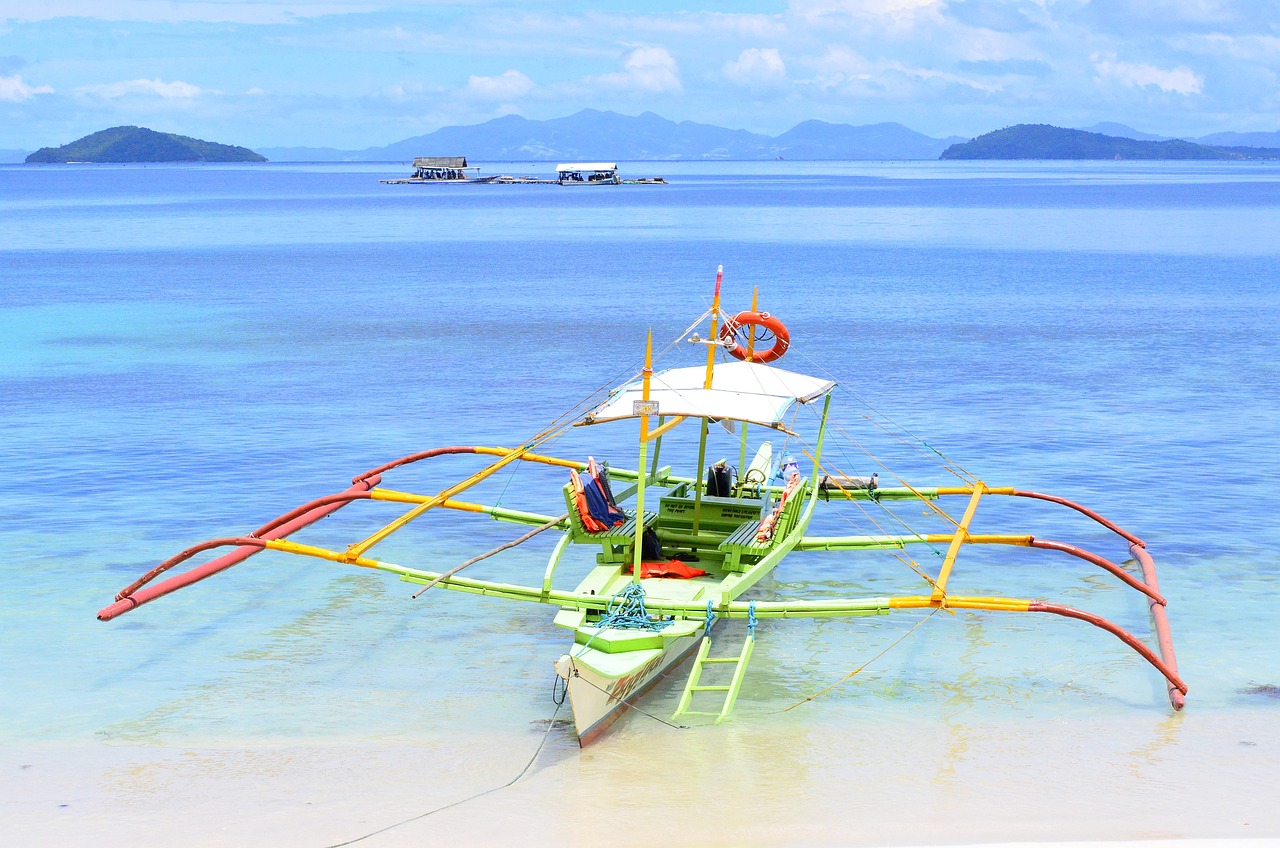
Let’s be honest — island hopping is the number one reason people make the long trek to Balabac, and it fully delivers. The islands here are largely untouched, with no resorts, no crowds, and no souvenir stalls. Just boats, beaches, and nature.
A typical island hopping package in Balabac costs around ₱3,500-₱5,500 per boat per day (good for 4-6 people). You can arrange this through your homestay or guesthouse in Balabac town, and most operators offer set routes hitting the best spots.
Onuk Island
This one is the crown jewel. Onuk Island features a sandbar that shifts and changes with the tides — at low tide, it stretches out like a white ribbon into the sea, and you can walk its entire length with water barely reaching your ankles. During our last visit, there were maybe three other boats on the whole island. Three. Compare that to El Nido during peak season and you’ll understand why people who’ve been to Balabac tend to get a faraway look in their eyes when you mention it.
The snorkeling around Onuk is excellent too. The coral gardens are intact and healthy, and you’ll spot sea turtles here fairly regularly if you’re in the water for any length of time.
Candaraman Island (Pink Beach)
Candaraman is famous for its pink-tinted sand — the color comes from tiny red organ pipe coral fragments mixed in with the white sand. It’s subtle in some light and absolutely striking in others, especially in the late afternoon when the sun is low. The beach curves gently around a calm bay, and the water is so clear you could be floating in a swimming pool.
This is one of those places where you spend an hour just walking slowly and looking at the sand trying to decide if the color is real. (It is. Trust me on this one.)
Bugsuk Island
Bugsuk is larger than the other islands and offers a mix of forest trails and beach time. The interior has some walking paths through the trees, and the beaches on the far side of the island are usually completely empty. It’s a good spot to pair with a picnic lunch — bring your own food or ask your boatman to pack something simple.
Melville Lighthouse Area
A bit further from the main island hopping circuit, the Melville Lighthouse sits on a small island and offers panoramic views of the surrounding sea. It’s more of a scenic add-on than a full activity, but if your boatman offers it as an option, it’s worth the extra 30-45 minutes.

Sea Turtle Watching in Balabac
Balabac is one of the best places in the Philippines to spot sea turtles in the wild. The surrounding waters are nesting habitat for green turtles and hawksbill turtles, both protected species under Philippine law.
You’ll likely encounter them while snorkeling around Onuk Island or in the channels between the smaller islands. They’re often feeding on seagrass beds in shallow water, and if you approach slowly and without splashing, they’re remarkably unbothered by human presence.
The Palawan Council for Sustainable Development enforces strict rules around wildlife interaction in Balabac. Don’t touch the turtles, don’t chase them, and absolutely don’t ride them (this is actually a rule that needs repeating because some visitors try). The fines are serious and the locals take this very seriously — as they should.
Insider tip: Early morning snorkeling sessions (right after you arrive at the island, before other boats show up) give you the best chance of a close turtle encounter. They’re most active and least spooked at dawn.
Exploring Balabac Town and the Local Culture
Balabac isn’t just beaches. The town itself is worth a few hours of exploration, and the people here are some of the warmest you’ll meet anywhere in Palawan.
The Molbog and Palawanon communities have lived on these islands for centuries, and their culture shows in the local architecture, the food, and the handcrafted goods you’ll find in the small market near the port. If you’re curious about the indigenous heritage of the area, the Department of Tourism Philippines has resources on responsible cultural tourism in southern Palawan.
Pick up some dried fish, fresh coconuts, and local snacks from the market before your island hopping day. It’s cheaper than anything you’ll find in Puerto Princesa and supporting the local economy directly is always a good move.
The seafood in Balabac is extraordinarily fresh — as in, it was swimming a few hours ago. Most homestays will cook for you, and a full meal of fresh fish, rice, and vegetables typically costs ₱150-₱300 per person. Don’t skip the grilled squid if it’s available.
Snorkeling and Diving Around Balabac
Even if you’re not a diver, the snorkeling in Balabac is world-class. The reefs here haven’t suffered the bleaching and damage that’s affected other parts of the Philippines, and the marine life is exceptional.
For snorkeling, the shallower reefs around Onuk, Candaraman, and the smaller unnamed islands along the standard boat route are excellent. Visibility is typically 15-25 meters on a calm day, and the coral diversity is genuinely impressive — hard corals, sea fans, brain corals, and more species of fish than you can count.
For certified divers, there are deeper sites around Balabac with strong current dives, steep walls, and large pelagic fish. Bring your own gear or inquire with local operators about dive support — it’s not as organized as El Nido or Coron, so you’ll need to arrange this in advance. Check our Coron wreck diving guide if you’re building a broader diving itinerary across Palawan.
Insider tip: Bring your own snorkel mask if you can. The gear available for rent in Balabac can be hit or miss, and a good seal makes a huge difference when you’re spending hours in the water.
Practical Tips for Visiting Balabac in 2026
Entry Fees and Permits
Balabac has an Environmental User Fee (EUF) of around ₱200-₱300 per person, typically collected at the municipal hall or by your boatman on arrival. There may also be additional fees per island depending on which sites you visit. Budget ₱500-₱700 total for permits and fees across a two-day island hopping trip.
Estimated Costs for Balabac
| Expense | Estimated Cost (PHP) |
|---|---|
| Bus/van Puerto Princesa to Brooke’s Point | ₱200-₱350 |
| Shared boat Rio Tuba to Balabac | ₱300-₱500 |
| Homestay accommodation (per night) | ₱500-₱1,200 |
| Island hopping boat (per day, full boat) | ₱3,500-₱5,500 |
| Meals (per day) | ₱300-₱600 |
| Environmental fees | ₱500-₱700 |
| Estimated 2-day trip total (per person, group of 4) | ₱6,000-₱9,000 |
What to Bring
Pack more than you think you need. There are no ATMs in Balabac, so bring all your cash from Puerto Princesa or Brooke’s Point. Cell signal is limited — Globe tends to have slightly better coverage than Smart in this area, but don’t count on reliable data. A power bank is essential.
Sunscreen is important — use reef-safe formulas to protect the coral. Bring reef-safe brands from the city because local options may be limited. Pack snacks, a dry bag for your electronics, and a sarong or towel you don’t mind getting sandy.
If you’re not sure what to pack for Palawan in general, our complete Palawan packing guide covers everything you need.
Best Time to Visit Balabac
The dry season from December through May is the ideal time to visit Balabac. March to May gives you the calmest seas and best visibility for snorkeling. June through October brings the southwest monsoon — boats may be cancelled and some islands become inaccessible. Always check PAGASA for weather forecasts before you travel south.
For a broader look at Palawan’s seasons, see our best time to visit Palawan guide.
How Balabac Compares to El Nido and Coron
So how does Balabac stack up against Palawan’s more famous destinations? It depends entirely on what you’re looking for.
El Nido has the iconic karst cliffs, more organized tours, and a proper town with restaurants and nightlife. Coron has the best wreck diving in Asia and the famous Kayangan Lake. But Balabac has something neither of those places can offer right now: genuine remoteness. You’re unlikely to see tour boats lined up at the same beach, or feel the low-level pressure of crowds. For more on how the main destinations compare, read our El Nido vs Coron guide.
Balabac rewards travelers who are flexible, okay with basic accommodation, and excited by the idea of a place that hasn’t been smoothed out for mass tourism yet. If you’re planning a bigger Palawan trip, our 7-day Palawan itinerary shows you exactly how to fit Balabac alongside El Nido and Coron.
The things to do in Balabac Palawan are unlike anything else on the island. It takes effort to get here, and that’s part of what keeps it special.
FAQ: Things to Do in Balabac Palawan
Is Balabac safe to visit in 2026?
Yes, Balabac is generally safe for tourists. It’s a quiet, close-knit community and visitors are welcomed warmly. As with any remote area, take standard precautions: keep your valuables secure, don’t travel alone at night in unfamiliar areas, and check travel advisories before your trip. Read our full guide to safety in Palawan for more context.
How many days do I need in Balabac?
Two to three days is the sweet spot. One full day for island hopping, one morning for exploring Balabac town, and a half-day buffer for travel delays (which are common on the boat routes). If you want to add a second island hopping day to reach more remote spots, budget four days total.
Do I need a special permit to visit Balabac?
No special national permit is required, but you’ll pay an Environmental User Fee (around ₱200-₱300) upon arrival. Some individual islands have their own small entrance fees too. Your local boatman or homestay host will walk you through what’s needed.
Can I see sea turtles in Balabac?
Yes, sea turtles are commonly spotted while snorkeling around Onuk Island and other shallow reef areas. Morning snorkeling sessions give you the best chance. Remember: observe only, no touching.
Is there ATM access in Balabac?
No. There are no ATMs in Balabac. Bring sufficient cash from Puerto Princesa (the last reliable ATM point before heading south). Budget generously and have extra cash for unexpected fees or an extended stay due to weather.
What’s the best island to visit in Balabac?
Onuk Island is the most iconic, with its shifting sandbar and excellent snorkeling. Candaraman (pink beach) is a close second. If you can only do one island, go to Onuk.
Can I combine Balabac with an El Nido or Coron trip?
Yes, but it adds significant travel time. Most travelers visit Balabac as a standalone trip from Puerto Princesa. If you want to do all of Palawan’s highlights, check our 7-day Palawan itinerary which gives you a realistic sense of how to fit it all in.
Ready to Explore the Best of Palawan?
Balabac is the wild card that completes the Palawan experience. But if you’re starting your Palawan journey with El Nido or Coron first, we’ve got you covered. Check out our El Nido island hopping tours and Coron tour packages — book directly through CMT for the best local rates and personalised service via Facebook Messenger.