Best Time to Visit South Korea 2026: A Month-by-Month Guide
Korea has four seasons that actually behave like four seasons, which is a novelty for most of us. So the best time to visit south korea isn’t one answer, it’s four very different holidays wearing the same passport stamp.
The default advice is spring or autumn. It’s good advice. It’s also the advice everyone else follows, which is why an April hotel in Seoul costs what a January one costs plus fifty percent. This guide goes month by month so you can pick deliberately instead of by default.
The Short Answer
For Filipinos, late October through mid-November is the best combination of weather, scenery and price. Comfortable 12°C to 20°C days, foliage across the palaces and the mountains, and airfares below spring levels.
Early April is the other obvious window, for cherry blossoms, but you pay for it in crowds and fares. Late January and February are the value months if you can handle real cold. And June through early September is the cheapest stretch, with rain and heat as the price.
Avoid, unless you have no choice: Seollal, Chuseok, and the first week of May. Korean domestic travel peaks then and everything gets harder.
Korea’s Seasons at a Glance
| Season | Months | Seoul temps | What defines it | Manila return airfare |
|---|---|---|---|---|
| Winter | Dec to Feb | Minus 10°C to 5°C | Dry, bright, genuinely cold | ₱11,000 to ₱20,000 |
| Spring | Mar to May | 5°C to 23°C | Blossoms, fine dust season | ₱20,000 to ₱35,000 |
| Summer | Jun to Aug | 24°C to 33°C | Monsoon then heat | ₱10,000 to ₱18,000 |
| Autumn | Sep to Nov | 10°C to 27°C | Clear skies, foliage | ₱15,000 to ₱26,000 |
Airfares are indicative return ranges for Manila to Incheon booked two to four months ahead. Book inside a fortnight and they stop meaning anything. For the full cost picture, see our South Korea trip cost guide in pesos.
December to February: Cold, Cheap and Weirdly Beautiful
December
Seoul in December runs around minus 2°C to 6°C. Dry, often sunny, and the light is lovely. Christmas is celebrated commercially rather than as a public holiday, so the city fills with illuminations without shutting down.
Ski resorts open through the month. Yongpyong, Vivaldi Park and the Pyeongchang area are all within a couple of hours of Seoul, and day packages including transport and rental are widely sold.
The catch is that Philippine holiday demand peaks in the same weeks, so airfares in the second half of December climb hard even though Korean domestic demand doesn’t.
January
The coldest month. Seoul averages minus 6°C to 2°C and can drop below minus 10°C on a bad morning. If you’ve never left the Philippines, this is a shock to the system. It’s also, for a lot of people, the entire point.
Hotels are at their yearly floor. Attractions are empty. Han River parks freeze at the edges, and you can walk a palace courtyard in the snow with almost nobody else there.
Insider tip: Buy thermal base layers, gloves and a proper insulated coat in Manila before you fly. Uniqlo Heattech and equivalents cost roughly the same here and you will not want to be shopping for a jacket at minus 5°C on your first morning.
February
Still cold, starting to ease by month’s end. The thing to plan around is Seollal, the Lunar New Year, which in 2027 falls across 6 to 8 February with a substitute holiday on the 9th, making a four-day national break.
During Seollal, intercity buses and trains sell out, many small restaurants and shops close for two or three days, and the country effectively goes home to family. Palaces and major museums often stay open and sometimes waive admission, which is a nice consolation, but plan your food and your travel days carefully.
March to May: Blossoms, Crowds and the Dust Question
March
March is a transition, and a slightly awkward one. Early March is still cold, around 2°C to 10°C. By the end of the month Seoul is properly mild and the first blossoms appear in the south.
Cherry blossoms move south to north. Jeju opens first, usually late March. Busan and the Jinhae area follow within days. Seoul typically peaks in the first week or so of April, although the exact timing shifts each year with the winter temperatures.
March also starts fine dust season, which nobody warns you about. Airborne particulates from regional sources push air quality down on some spring days, and on bad ones locals wear masks outdoors. It’s not every day, and it doesn’t ruin a trip, but pack a few KF94 masks and check the daily air quality index.
April
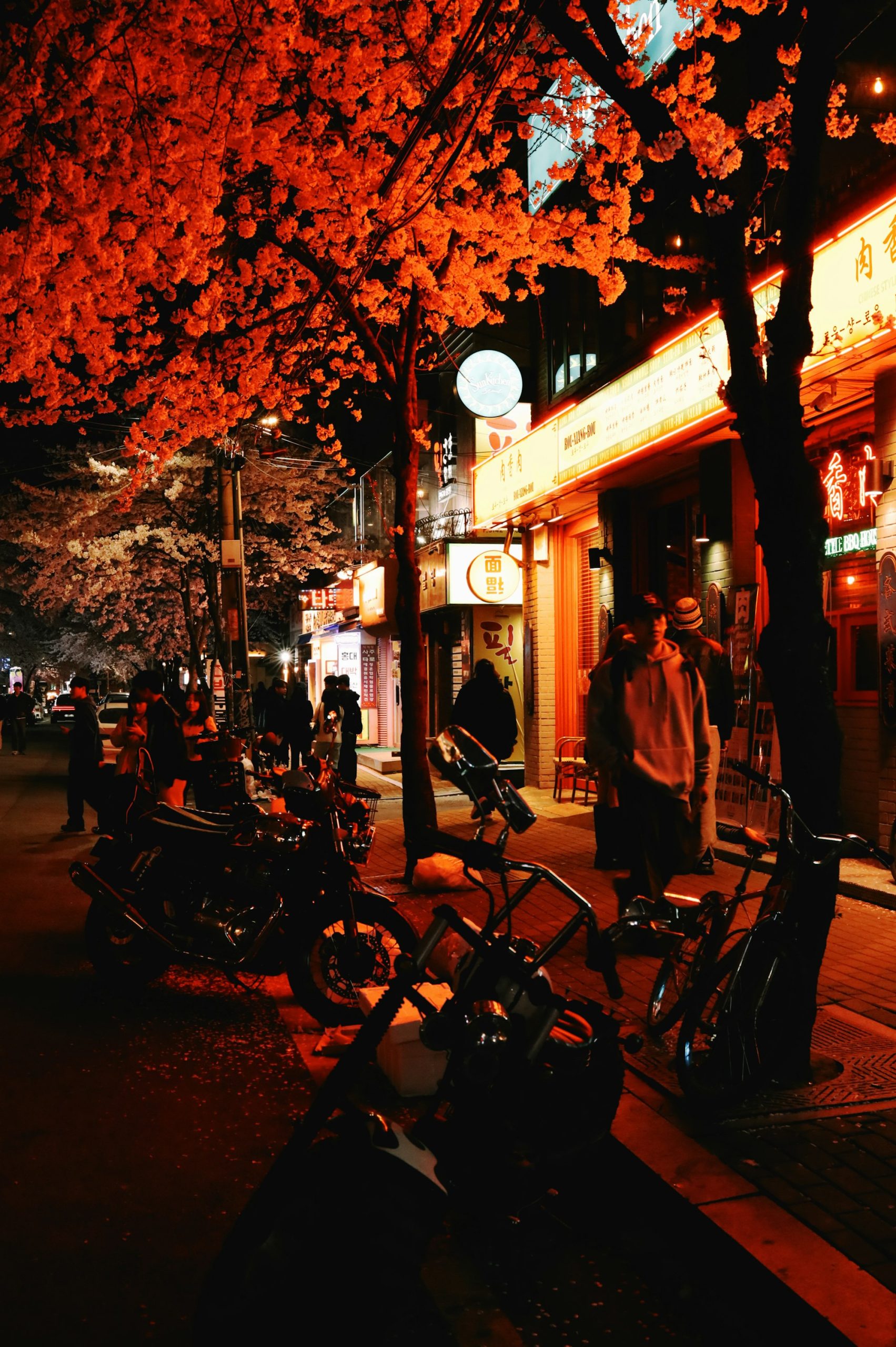
Peak everything. Cherry blossoms in Seoul in the first week or two, temperatures of roughly 8°C to 18°C, and the whole country outdoors. Yeouido’s blossom street, the Seokchon Lake loop and the palace grounds are all spectacular and all mobbed.
Book accommodation four to six months out for blossom week. Airfares are at or near their yearly peak. And because Korean visa applications also spike in March and April, apply early: the application centre’s processing times stretch in exactly the season you need them not to.
Insider tip: Blossom timing is a forecast, not a promise, and it can swing a week either way. If sakura is the whole reason for the trip, give yourself six nights spanning the first week of April rather than a tight three-night window. A short trip pinned to a single date is a gamble you’ll probably lose.
May
Quietly the best month for weather. Around 14°C to 23°C, dry, green, long evenings, and the blossom crowds have gone.
The one thing to watch is the start of the month. Children’s Day on 5 May is a public holiday and usually anchors a busy domestic travel weekend. After roughly the 8th, May settles into near-perfect travel conditions at prices below April.
Is May the smartest spring booking? For most people, yes. You trade the blossoms for better weather, fewer people and a noticeably cheaper trip.
June to August: Rain, Heat and the Cheapest Fares

June
Early June is warm and pleasant, roughly 19°C to 27°C. Then jangma, the monsoon, usually arrives in the second half of the month and runs into late July.
It isn’t constant rain. It’s humid, grey stretches punctuated by heavy downpours, much like a Philippine wet season afternoon but cooler. Museums, cafés, markets and underground shopping streets all work fine in it.
Airfares in June are often the cheapest of the year, which is the trade you’re making.
July
Monsoon through most of the month, then heat. Temperatures climb to around 24°C to 31°C with high humidity. The Boryeong Mud Festival on the west coast runs in July and is exactly as chaotic as it sounds.
If you’re travelling in July, build your days around indoor anchors: Leeum or the National Museum in the afternoon, markets and street food in the evening, outdoor sights early.
August
Hottest and stickiest, often 26°C to 33°C, plus it’s typhoon season. Storms that form in the Philippine Sea sometimes track north toward the Korean peninsula, and August and September carry the highest risk of disruption.
This is the month where travel insurance stops being optional. Check the Korea Meteorological Administration in the days before you fly, and the same reasoning we set out in our travel insurance guide applies here.
Going anyway? Head east and north. Sokcho, Gangneung and the Seoraksan area are several degrees cooler and on the coast.
September to November: The Best Window
September
The first half is still warm and inside the typhoon window. From around the third week, the humidity breaks and Korea turns lovely: roughly 18°C to 26°C, clear skies, everything still green.
Chuseok, the harvest holiday, is the thing to plan around. In 2027 it falls across 14 to 16 September, a Tuesday to Thursday, with no substitute day since none of it lands on a Sunday. Expect the same pattern as Seollal: packed transport, family travel, some closures.
Autumn colours begin in the far north, with Seoraksan usually the first major mountain to turn, from late September into October.
October
If you asked us to pick one month, this is it. Around 11°C to 20°C, dry, bright, and the foliage sweeps down the peninsula through the month. Seoul’s palaces, Bukhansan, Naejangsan and the Gyeongju area are all at their best.
Festivals cluster here too: the Busan International Film Festival in early October, plus harvest and lantern events in most cities.
Airfares rise through October but stay well under April’s. Book two to three months out and you’ll do fine.
November
Early November holds the foliage in Seoul and the south, with crisp 7°C to 15°C days. It’s one of the most comfortable months of the year for Filipinos: cold enough to feel like travel, not cold enough to need serious gear.
By late November the leaves are down, the temperature drops toward freezing and prices soften again. The Seoul Lantern Festival along the Cheonggyecheon usually runs in this stretch and costs nothing to walk.
Match the Month to What You Want
| What you want | Go in | Avoid |
|---|---|---|
| Cherry blossoms | Late Mar (Jeju, Busan), early Apr (Seoul) | Everything else |
| Autumn foliage | Oct to early Nov | Jun to Aug |
| Snow and skiing | Jan to Feb | Apr to Nov |
| Cheapest possible trip | Jun, late Jan | Apr, late Dec |
| Best all-round weather | Mid May, Oct | Jul to Aug |
| Fewest crowds | Jan, late Nov | Seollal, Chuseok, early May |
Three Timing Notes Specific to Filipinos
Work backwards from the visa. Filipinos need a tourist visa for mainland Korea, and processing stretches during the March to April and September to November peaks, which are exactly the months you want. Start two to three months ahead. Our Korean visa guide for Filipinos covers the current requirements.
Philippine holidays stack on top of Korean ones. Holy Week, the April and May school break, and Christmas all push Manila to Incheon fares up independently of what’s happening in Korea. That’s why April and late December hurt twice.
The cold is further than you think. Coming from a country that rarely drops below 22°C, minus 5°C is not a matter of adding a jacket. Layers, thermals, gloves and a beanie. Get them before you go.
Frequently Asked Questions
What is the best month to visit South Korea?
October, for the combination of clear weather, autumn colours, moderate crowds and fares below spring levels. Mid-May is a close second.
When is cherry blossom season in Korea?
Jeju and the far south usually open in late March, Busan and Jinhae a few days later, and Seoul typically peaks in the first week or so of April. Timing shifts each year with the winter temperatures, so forecasts only firm up a few weeks out.
What is the cheapest time to fly from Manila to Seoul?
June and the second half of January, generally. Both fall outside Korean domestic peaks and Philippine holiday travel.
Is Korea too cold for Filipinos in winter?
It’s a serious adjustment, with Seoul often below freezing in January, but it’s manageable with proper layers. Plenty of Filipino travelers pick winter specifically to see snow, and hotel prices in January are the lowest of the year.
Should I avoid Korea during Chuseok and Seollal?
If you can. Domestic transport sells out, some businesses close for several days, and the whole country is travelling. Major palaces and museums often stay open and sometimes waive entry, so it isn’t a washout, but it is harder.
What is fine dust season in Korea?
Air quality dips on some spring days, mostly March through May. It varies day to day rather than being constant. Pack a few KF94 masks and check the daily index.
Does Korea get typhoons?
Yes, mainly in August and September, often from systems that pass the Philippines first. Flight disruption is possible, which is why insurance matters in those months.
Pick Your Dates, We’ll Handle the Rest
CMT Ticketing and Services books flights, handles visa assistance and arranges organised Korea packages. Tell us what you want out of the trip, blossoms, snow, foliage or the cheapest week you can get, and we’ll tell you honestly which month delivers it. Message us on Facebook Messenger or WhatsApp, or browse our travel packages.
Planning a year of travel rather than one trip? Our best time to visit Palawan window runs November to May, so a Korean autumn and a Palawan summer slot together neatly, and you can see our El Nido tour packages while you’re deciding.