

South Korea Visa for Filipinos 2026: Requirements, Fees and the K-ETA Question
The south korea visa for filipinos has a reputation, and most of it is out of date. People still talk about six months of bank statements, hundred-thousand-peso show money, and getting denied for no stated reason. Some of that was true a few years back. A lot of it isn’t anymore.
2026 has been the friendliest year for Filipino applicants in a long while. One requirement that used to sink a huge share of applications has been removed outright. So before you talk yourself out of the trip, read what the rules actually say now.
We’ll cover the visa types, the real document list, the fees, how long it takes, and the three legitimate ways into Korea that skip the tourist visa entirely.
First: Filipinos Do Not Need a K-ETA
Let’s kill this one immediately, because it wastes an enormous amount of people’s time.
The K-ETA, Korea Electronic Travel Authorization, is for citizens of countries that don’t need a visa for Korea. It’s their pre-clearance step. The Philippines is not on Korea’s visa-exempt list, so Filipinos don’t apply for a K-ETA and shouldn’t pay any website offering to file one.
What Filipinos apply for instead is a short-term visit visa, usually the C-3-9 tourist category, through the Korea Visa Application Center in the Philippines. Any blog or agent telling you otherwise is either outdated or selling something.
The Big 2026 Change: No More Bank Statements
Effective 20 February 2026, the Korea Visa Application Center in the Philippines waived the requirement to submit three months of bank statements. Not reduced. Waived, across visa types.
Understand what that means practically. The old requirement punished exactly the people most likely to be honest travelers: freelancers, small business owners, people whose income moves through GCash rather than a bank, OFW dependants living on remittances. If your statement showed a lump sum appearing the week before you applied, that was often the end of it.
Student proof also relaxed, with either a school certificate or a student ID now accepted rather than a specific document. And families can submit shared supporting documents under one representative applicant instead of duplicating everything per person.
Insider tip: Removing the bank statement doesn’t remove the underlying question the consul is asking, which is whether you’ll come home. So put your energy into proof of ties instead: a certificate of employment with your leave approval, business registration if you’re self-employed, property or school documents for dependants. That’s what actually carries the application now.
What You Actually Need to Submit

Requirements shift, so treat this as the shape of the application rather than a final checklist, and confirm against the current KVAC list before you file.
- Completed visa application form, signed
- Original passport, valid at least six months beyond travel, plus a photocopy of the data page
- Recent passport-sized photo on a white background, taken within six months
- Proof of employment or business: certificate of employment, approved leave, business registration, or income tax return
- Confirmed round-trip flight booking and hotel reservation
- Day-by-day itinerary
- Proof of relationship for family applications, such as PSA birth or marriage certificates
Note what’s missing from that list now: three months of bank statements. If an agent still asks you for them, ask why.
If you’re employed
Certificate of employment on company letterhead, stating position, length of service, salary and, crucially, that your leave has been approved for those exact dates. An ITR or recent payslips strengthen it.
If you’re self-employed or a freelancer
DTI or SEC registration, mayor’s permit, and your latest ITR. If you work with foreign clients, contracts or invoices help show ongoing commitments that bring you back.
If you’re a student or dependant
School certificate or student ID, plus the supporting documents of whoever is sponsoring you, and a PSA document proving the relationship. With the 2026 family-representative rule, a parent can now carry the shared documents for the household.
Fees and Processing Time
| Item | Amount | Notes |
|---|---|---|
| Visa fee, stay of 59 days or less | Free | Single entry, short-term visit |
| Visa fee, stay of 60 to 90 days | Around ₱2,000 | Longer stays are charged |
| KVAC service fee | ₱1,000 | Raised from ₱900 effective 25 Aug 2026 |
| Regular processing | Around 10 working days | Longer in peak season |
| Express processing | Around 5 working days | Where available |
Yes, the tourist visa itself is free for stays under 60 days. The cost you pay is the centre’s service fee and, if you use one, an agency handling fee on top.
Processing times have been revised more than once during 2026, so the figures above are the most recent published and not a guarantee. Peak application seasons are March and April, and September through November, which is precisely when everyone wants to travel for cherry blossoms and autumn foliage. Apply early for those windows. Check the current notice on the Embassy of the Republic of Korea in the Philippines site before you plan around a date.
One detail that catches people: a single-entry visa is generally valid for three months from the date of issue, not from the date you travel. Apply too early and it can expire before your trip. Roughly two to three months out is the sweet spot.
The Visa-Free Routes Into Korea
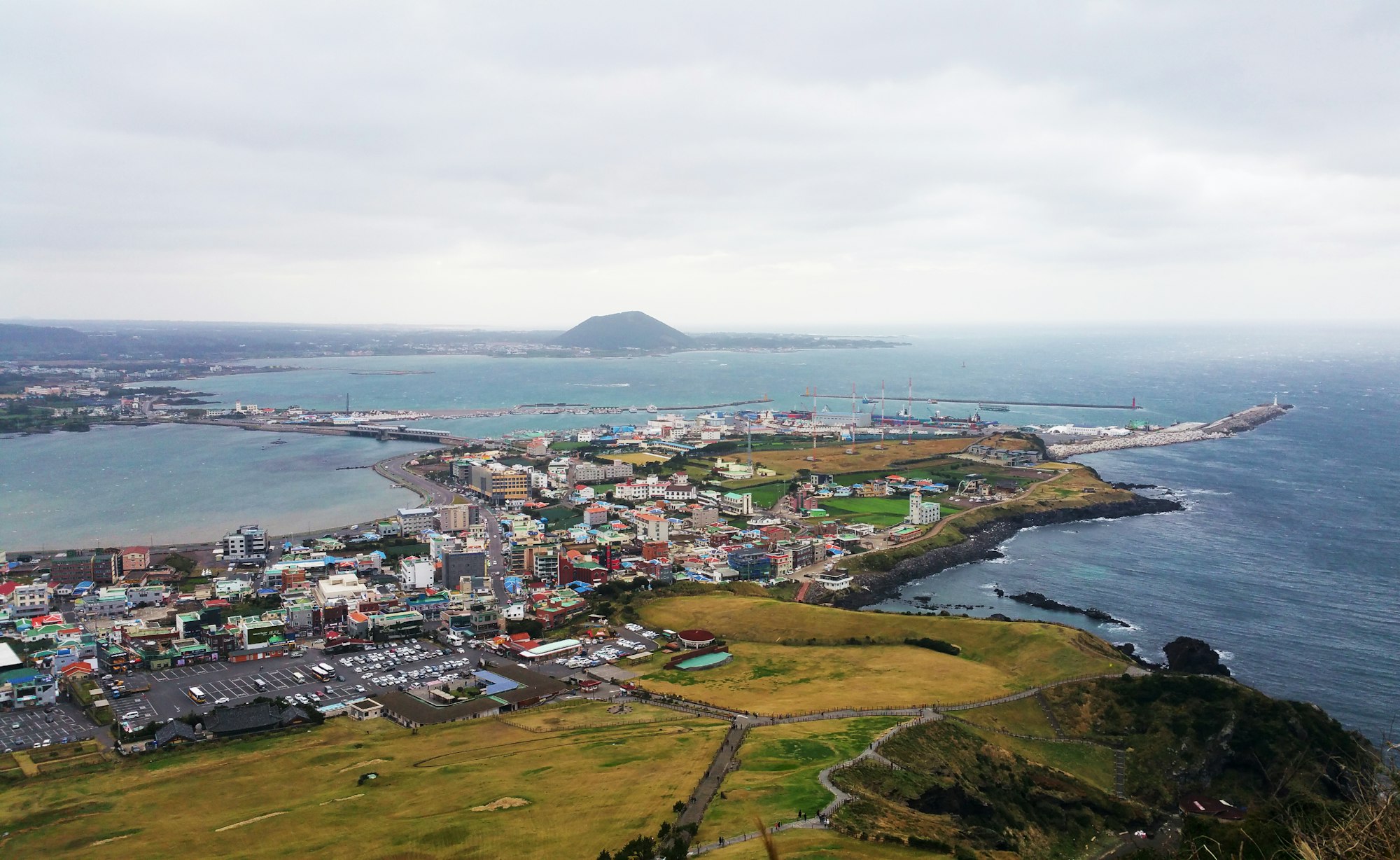
Three routes exist, and all of them come with conditions.
Jeju Island. Filipinos can enter Jeju visa-free for tourism on a direct flight, subject to normal immigration screening. You must fly directly in and out, and you can’t use it as a back door to the mainland.
The Jeolla region through Muan International Airport. Join a group tour of five or more people arranged by one of the government-accredited travel agencies, fly directly in and out of Muan, and you get up to 15 days without a tourist visa. Movement is limited to North Jeolla, South Jeolla, Gwangju Metropolitan City and Jeju.
Yangyang International Airport. A comparable group-tour arrangement operating through Yangyang, in Gangwon Province.
Two warnings. First, only government-designated agencies can run these tours, and the approved list changes, so verify before you pay anyone. Second, these are not loopholes. Immigration officers know exactly what the programme allows, and travelling outside the permitted region is a fast route to being sent home and flagged for future applications.
Insider tip: If you’ve been refused a Korea visa before, the Jeju route is the smartest next move. A clean entry and a clean exit on a Jeju trip builds the travel history that makes a later mainland application much easier to approve.
Why Applications Get Refused
Korea doesn’t publish reasons for refusal, which is frustrating, but the patterns are consistent.
Weak ties to the Philippines. No steady employment, no business, no property, no dependants. This is the big one, and it’s why proof of ties matters more than proof of money now.
Inconsistent documents. Your itinerary says seven days, your flight booking says ten, your leave approval says five. Consuls notice.
A first-ever international trip with no travel history. Not fatal, but it raises the bar. If Korea is your first stamp, consider building history somewhere visa-free first.
Applying through an unaccredited fixer. Agencies that “guarantee” approval are a red flag. Nobody can guarantee a consular decision, and fabricated documents get people permanently barred.
If you are refused, you can reapply, but not immediately. Fix the underlying weakness rather than resubmitting the same file with a different photo.
Multiple-Entry Visas and Why They’re Worth Asking About
Most first-time Filipino applicants get a single-entry visa, and that’s fine for one trip. But multiple-entry visas do exist, and certain applicants have a genuine shot at them.
Broadly, the profiles that tend to qualify are people with a record of previous travel to Korea or to OECD countries, government employees and their immediate families, licensed professionals, and applicants in specific occupational categories the embassy lists from time to time. The exact categories move, so this is one to check rather than assume.
Why it matters: a multiple-entry visa spares you the whole application cycle next time, which is worth real money once you factor in the service fee, the documents, the day off work and the courier. If you already travel often, ask about it on your first application rather than defaulting to single entry.
Insider tip: Travel history is cumulative and it counts. A Japan stamp, a Taiwan stamp, a Schengen stamp, even a clean Jeju entry all make the next application easier to approve. Build the passport before you aim at the hard visas, not after.
Common Mistakes That Slow the Whole Thing Down
Applying too early. The visa can expire before you fly. Two to three months out, not six.
Booking non-refundable flights first. You need a flight booking, not a paid ticket. A reservation or hold is enough for the application, and it protects you if the decision goes the wrong way.
An itinerary that doesn’t match the bookings. If your hotel reservation ends on the 12th and your return flight leaves on the 15th, explain it or fix it. Unexplained gaps read as an intention to overstay.
Submitting during peak weeks without a buffer. March, April, September, October and November are when everyone applies. Give yourself three or four weeks of slack in those months, not the published minimum.
After the Visa: What Else to Sort Out
Book flexible or refundable flights where you can, because the visa timeline and the fare sale timeline rarely line up. Carriers on the Manila to Incheon route include Cebu Pacific, Philippine Airlines, Korean Air, Asiana and Jeju Air, with direct flights from Cebu and Clark too.
Get travel insurance. It isn’t a visa requirement in most cases, but Korean medical care for non-residents is expensive enough that one bad fall on an icy pavement can cost more than the holiday. Our travel insurance guide covers what to look for.
Then plan the actual trip. Our South Korea travel guide for Filipinos goes through seasons, costs in pesos, Seoul in three days and the mistakes first-timers keep making.
Frequently Asked Questions
How much is the South Korea visa for Filipinos in 2026?
The visa fee is free for stays of 59 days or less. Stays of 60 to 90 days cost around ₱2,000. On top of that, the KVAC service fee is ₱1,000, raised from ₱900 effective 25 August 2026.
Do Filipinos still need bank statements for a Korean visa?
No. As of 20 February 2026 the three-month bank statement requirement was waived for all applicants at the Philippine application centre. Proof of employment, business or study still matters.
How long does a Korean visa take to process?
Recent notices put regular short-term visit processing at around ten working days, with express service around five where available. Times have been revised several times in 2026 and stretch during the March to April and September to November peaks.
Can Filipinos go to South Korea without a visa?
Only via specific routes: Jeju Island on a direct flight, or accredited group tours through Muan into the Jeolla region, or through Yangyang. Each has region and duration limits. Seoul and the wider mainland require a tourist visa.
How long is a Korean tourist visa valid?
A single-entry short-term visit visa is generally valid for three months from the date of issue, with the permitted stay printed on the visa itself, commonly up to 59 days. Apply around two to three months before you travel.
Can I apply for a Korean visa without a job?
Yes, but you’ll need a sponsor and strong proof of your relationship to them, plus whatever ties you have to the Philippines. It’s harder, not impossible, and an accredited agency can help structure the file properly.
What happens if my Korean visa is denied?
You can reapply, but wait and change something substantive first. Reasons aren’t published, so work on the likely weak point: ties to home, document consistency, or travel history.
Want Help With the Application?
CMT Ticketing and Services handles flights, visa assistance and organised group packages, and we’ll tell you honestly whether a tourist visa or one of the visa-free group routes is the better fit for your situation. Message us on Facebook Messenger or WhatsApp, or browse our travel packages.
And if the visa timeline doesn’t fit your leave dates this year, our El Nido island hopping tours need no paperwork at all beyond a booking message.
[…] money directly, but it saves a lot of people the expense of artificially padding an account. Our South Korea visa guide for Filipinos walks through the whole […]
[…] to November peaks, which are exactly the months you want. Start two to three months ahead. Our Korean visa guide for Filipinos covers the current […]