
Palawan Bearcat (Binturong) Facts You Should Know in 2026
The first time I smelled a binturong before I saw one, I honestly thought someone nearby was running a popcorn machine. We were on a jungle boardwalk near Puerto Princesa, and the guide just laughed and pointed up into the canopy. That’s the Palawan bearcat, he said. And that’s how most people meet this animal: nose first, eyes second.
The Palawan bearcat, more properly called the Palawan binturong (Arctictis binturong whitei), is one of the strangest and least talked-about animals in the Philippines. It’s not a bear. It’s not a cat. It’s a shaggy, tree-climbing mammal with a tail that works like a fifth limb, and it exists nowhere else in the country except this one island province. If you’re planning a Palawan trip and want to know what this creature actually is, where you can responsibly see one, and why conservationists are worried about it, here’s everything worth knowing before you go.
What Exactly Is a Binturong? (Bearcat Basics)
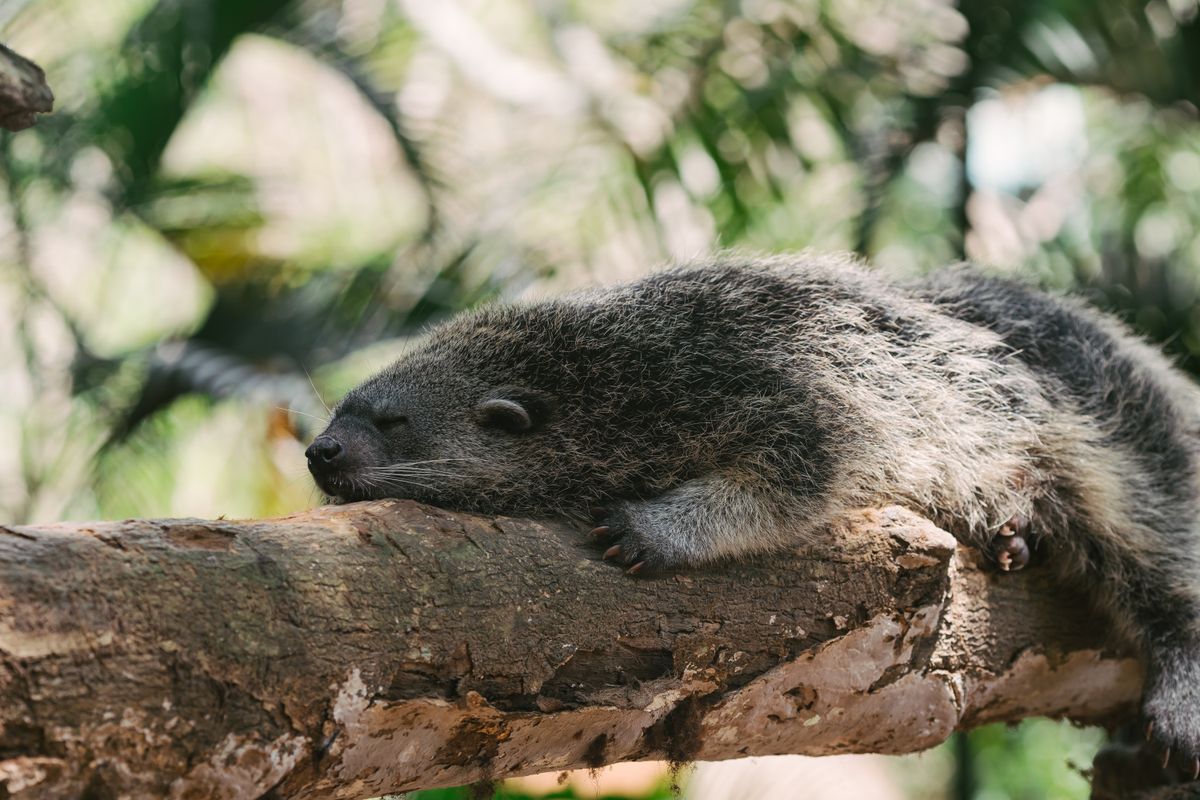
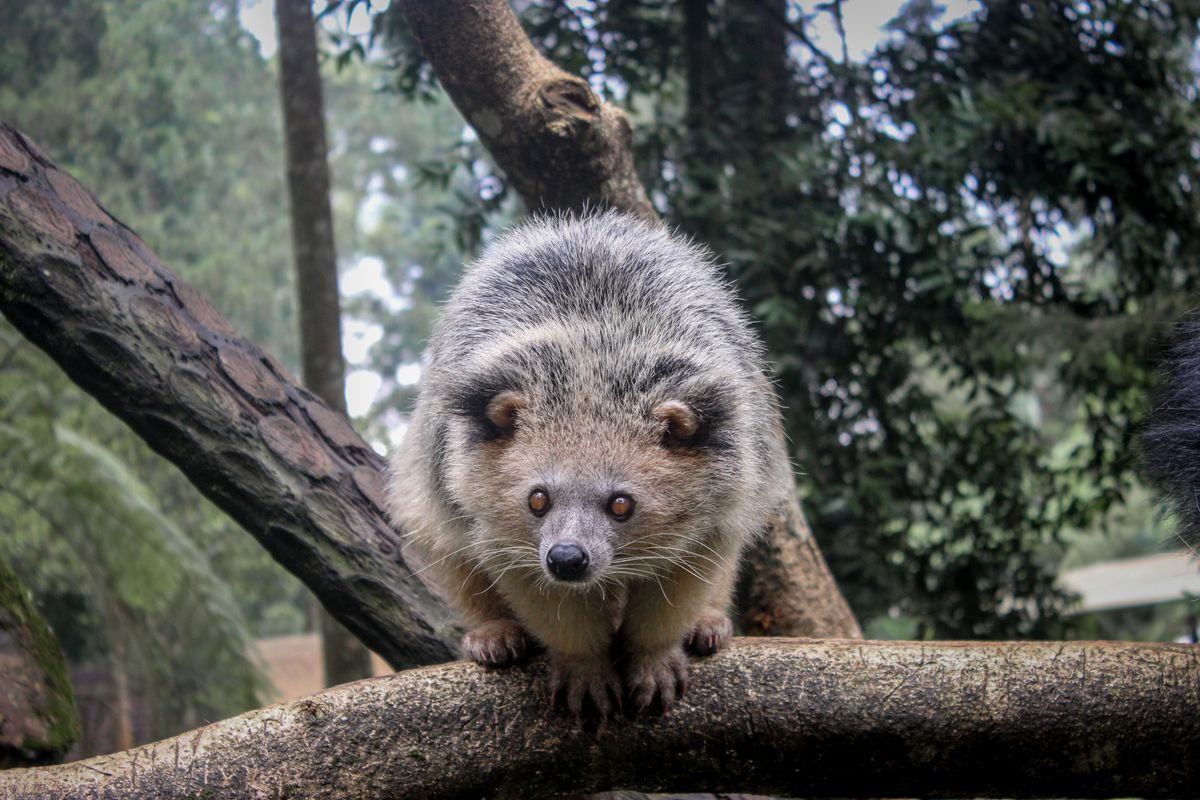
Despite the nickname, the binturong belongs to the civet and genet family, Viverridae, not to bears or cats at all. Adults can reach up to 1.4 meters long including the tail, which makes them one of the largest native land mammals on Palawan. They’re covered in coarse, shaggy black fur, often with a grizzled, almost frosted look around the face, and they have long white whiskers that make them look permanently surprised.
Here’s the thing that throws people off: their body plan is a genuine mashup. The face is narrow and cat-like. The feet and gait are heavy and bear-like, flat-footed the way a bear walks rather than the springy step of a cat. Add a thick, muscular tail almost as long as the body, and you get an animal that doesn’t look quite like anything else you’ll encounter on a Palawan tour.
Insider tip: Binturongs are almost entirely nocturnal and crepuscular, meaning most of their activity happens at dusk, dawn, and through the night. If you visit a rescue center at midday, don’t be surprised if yours is curled up asleep in a high fork of a tree. That’s completely normal behavior, not a sign of a stressed animal.
The Palawan Subspecies: Found Nowhere Else in the Philippines
This is the detail that surprises most travelers. Binturongs as a species range across South and Southeast Asia, from India and Bhutan down through Myanmar, Thailand, Vietnam, Malaysia, and Indonesia. But within the Philippines, they exist in exactly one place: Palawan. Nowhere else in this country’s roughly 7,600 islands has a native binturong population.
Why? Palawan’s wildlife has always been the odd one out in the Philippines, and there’s a real geological reason for it. During past ice ages, when sea levels dropped, Palawan was connected by land bridges to Borneo rather than to the rest of the Philippine archipelago. So a lot of Palawan’s mammals, the binturong included, share more in common biologically with Bornean wildlife than with anything found in Luzon or Mindanao. Locally, the Palawan population has been classified as its own subspecies, Arctictis binturong whitei, distinct enough that scientists treat it as a Palawan original rather than just a stray population of the mainland animal.
Insider tip: If wildlife is a big part of why you’re visiting, pair a binturong sighting with a stop to learn about the Palawan hornbill and Palawan peacock-pheasant. All three are used by local conservation groups as flagship species for the island’s unique, Borneo-linked ecosystem.
Why Does It Smell Like Popcorn? (The Bearcat’s Strangest Secret)
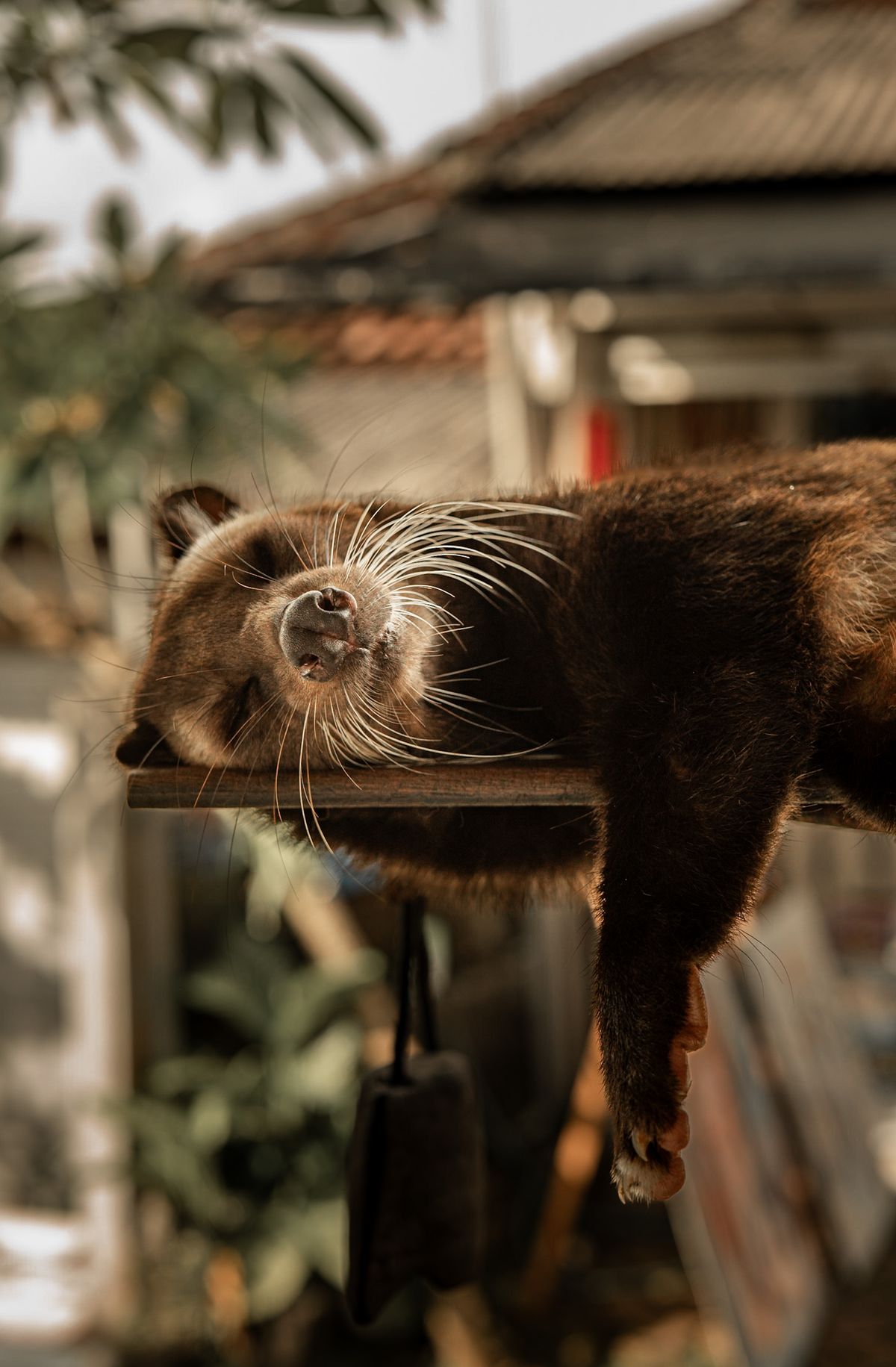
So, why the popcorn thing? It’s not a myth, and it’s not your imagination. Binturongs have scent glands near the base of the tail, and their urine also carries a compound called 2-acetyl-1-pyrroline, which happens to be the exact same chemical responsible for the smell of hot, buttered popcorn and toasted rice. As the animal moves through the canopy, its tail and hind feet drag through its own scent trail, marking territory and signaling to other binturongs that it’s around, and potentially ready to mate.
It genuinely catches people off guard. We had a guest on a Palawan trip once who refused to believe it wasn’t a snack cart somewhere in the rescue center until she saw the enclosure sign. Trust me on this one: it’s the animal, not a vendor nearby.
Insider tip: The scent tends to be stronger in males and gets noticeably more noticeable during the late afternoon feeding window, which lines up conveniently with most guided tour schedules.
That Tail Is a Superpower (Prehensile Tail Facts)
The binturong is one of only two carnivoran species on Earth with a fully prehensile tail, the other being the kinkajou of Central and South America, which isn’t even a close relative. That tail can grip a branch tightly enough to support the animal’s full body weight, functioning almost like a built-in safety rope while it moves through the treetops.
It gets stranger. A binturong’s ankles can rotate nearly 180 degrees, which lets it climb down tree trunks headfirst instead of reversing down like most climbing mammals have to. Combine the rotating ankles with the prehensile tail and you’ve got an animal built almost entirely for life above the forest floor. Wild binturongs rarely come down to the ground at all except to move between trees that aren’t connected by canopy.
What Do Binturongs Eat? (Diet and Their Role in the Forest)
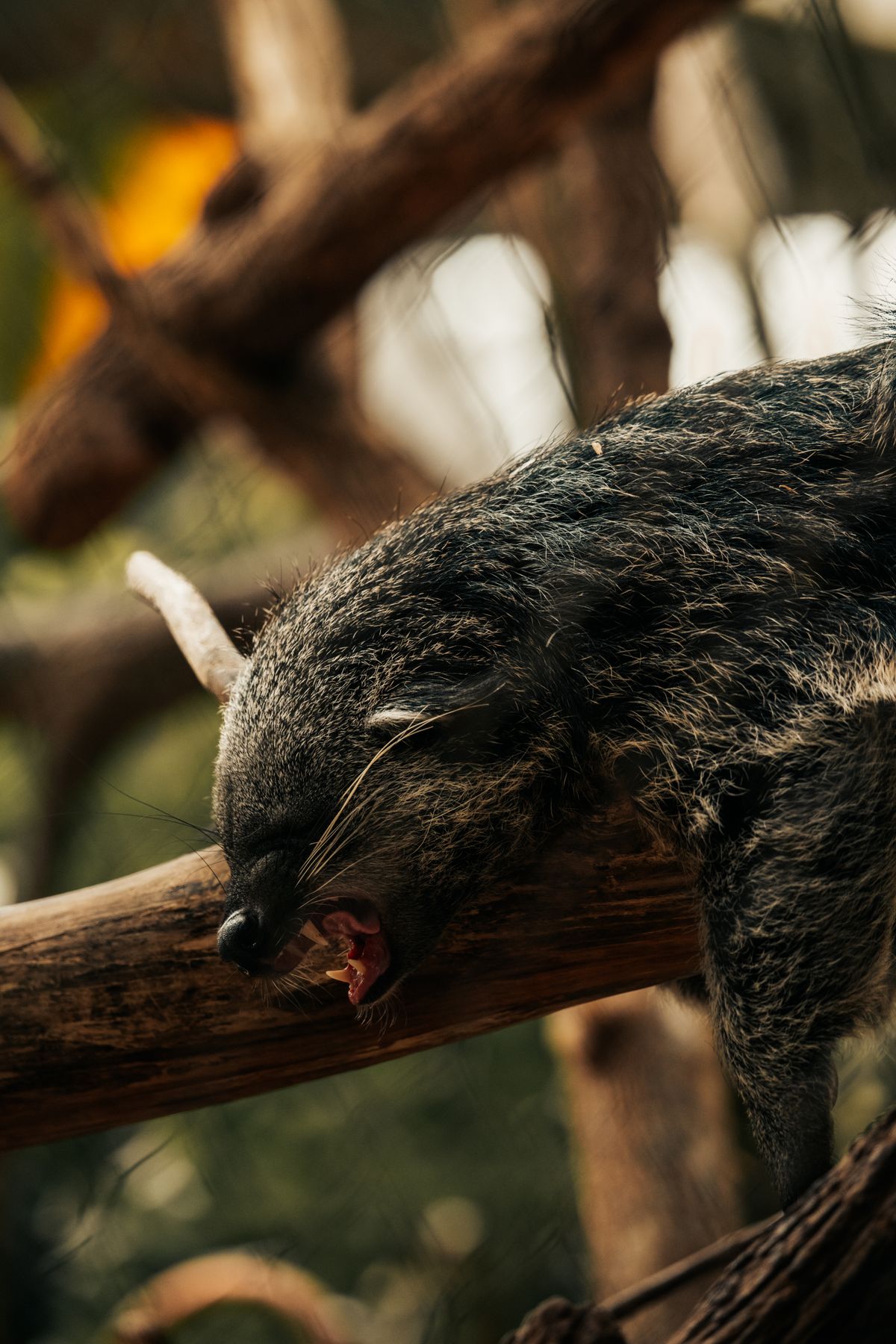
Here’s an odd fact: despite belonging to the order Carnivora and having the sharp teeth and claws to prove it, binturongs are mostly frugivorous. Figs make up the single biggest part of their diet, especially fruit from strangler fig trees. They’ll also eat shoots, eggs, small birds, insects, and the occasional small vertebrate, but fruit dominates.
That fruit habit actually makes binturongs quietly important to the health of Palawan’s rainforest. They’re one of the few animals with digestive enzymes strong enough to soften the tough outer coating of strangler fig seeds. After passing through a binturong’s gut, those seeds are primed to germinate. Fewer binturongs in the forest can mean slower regeneration of the fig trees that dozens of other species depend on, from hornbills to fruit bats.
| Binturong Fact | Detail |
|---|---|
| Scientific name | Arctictis binturong whitei (Palawan subspecies) |
| Family | Viverridae (civets), not bears or cats |
| Max length | Up to 1.4 m (4.6 ft), including tail |
| Diet | Mostly fruit, especially strangler fig, plus eggs, shoots, small animals |
| Activity pattern | Nocturnal and crepuscular |
| Signature trait | Prehensile tail, scent that smells like popcorn |
| IUCN status | Vulnerable (listed since 2007) |
| Found in Philippines | Only on Palawan |
Where to See a Palawan Bearcat in 2026 (Without Disturbing Them)
The most reliable place to see one up close is the Palawan Wildlife Rescue and Conservation Center in Barangay Irawan, about 30 minutes from Puerto Princesa city center. It’s open daily from around 8:30 AM to 5:30 PM, with short guided walkthroughs roughly every 15 minutes and an entrance fee that’s still budget-friendly, typically somewhere around ₱40 to ₱100 depending on current rates. The center houses rescued and rehabilitated animals, including binturongs, alongside Philippine crocodiles and native birds, so it’s a solid half-day stop if you’re already routing through Puerto Princesa for the Underground River.
Spotting one in the wild is a different story. Binturongs are shy, nocturnal, and genuinely hard to find without local knowledge of active fig trees. If a wild sighting matters to you, look for guides in the Sabang forest area who run early evening or night walks, since that’s when binturongs are actually moving and feeding. Daytime jungle walks almost never produce a sighting because the animal is asleep high in the canopy.
| Where to Go | Sighting Type | Best Time |
|---|---|---|
| Palawan Wildlife Rescue Center, Irawan | Guaranteed, rescued animals | Any time during opening hours |
| Sabang rainforest, guided night walk | Possible, wild animals | Dusk to late night |
| Underground River boardwalk | Rare, incidental | Early morning or late afternoon |
Insider tip: If you’re combining this with our El Nido island hopping tours, plan the wildlife center as part of a Puerto Princesa layover day rather than trying to squeeze it into an El Nido itinerary. The two areas are several hours apart by van, so it works best paired with our Puerto Princesa Underground River guide as one combined side trip.
Conservation Status: Why the Binturong Needs Protecting
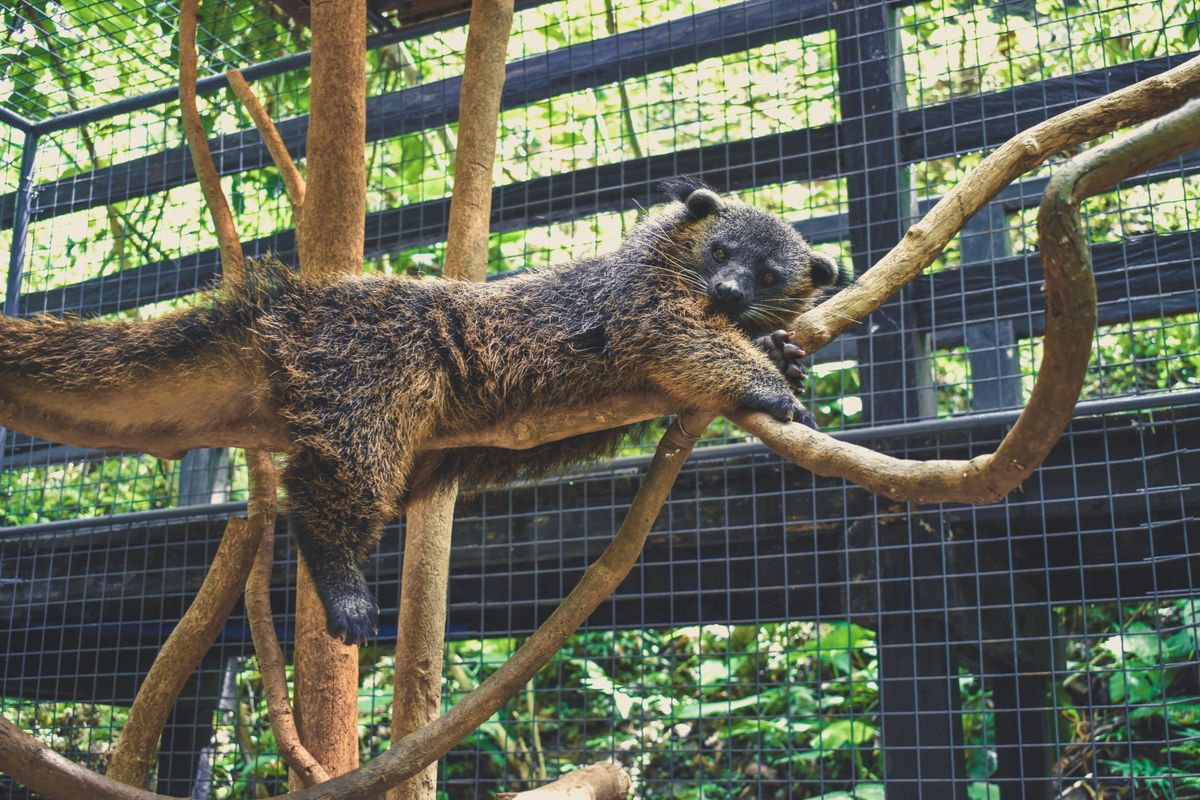
The Palawan bearcat has been listed as Vulnerable on the IUCN Red List since 2007, and the trend hasn’t reversed much since. The core threats are what you’d expect on a fast-developing island: loss of primary rainforest through logging and land conversion, hunting for bushmeat in some rural areas, and demand from the exotic pet trade, since young binturongs look appealing but grow into large, scent-marking adults that almost nobody is equipped to keep.
Palawan’s protected areas are managed under a fairly unique legal framework compared to the rest of the country. The Palawan Council for Sustainable Development oversees environmental regulation across the whole province specifically because of how much globally significant biodiversity is concentrated here. That’s part of why responsible tourism actually matters on this island in a very direct way: tourist spending that goes toward licensed wildlife centers and legitimate guides helps fund the rangers and rehabilitation programs that protected species like the binturong depend on.
Insider tip: Never book or accept a “wildlife selfie” opportunity involving a binturong, civet, or any wild animal outside of an accredited rescue or rehabilitation facility. If an operator is offering hands-on contact with a wild binturong for photos, that’s a red flag, not a bonus.
Responsible Wildlife Encounters in Palawan
If wildlife is part of why you’re drawn to Palawan, the binturong is a good reminder that this island runs on a different ecological clock than most Philippine destinations. A few habits go a long way: stick to licensed centers and guides, keep noise down on night walks, never use flash photography directly at a nocturnal animal, and skip any tour that promises guaranteed physical contact with a wild species.
It’s also worth building a little slack into your itinerary. Wild sightings are never guaranteed, and honestly, that’s part of what makes them memorable when they happen. This kind of low-impact, respectful wildlife viewing is exactly what the Philippine Department of Tourism has been pushing for across Palawan as part of its sustainable tourism agenda, and it’s a habit worth carrying into every stop on your trip. Pack accordingly, too. Our guide on what to pack for Palawan covers the closed shoes and insect repellent you’ll want for any rainforest walk. And if you’re planning your trip length around this kind of side excursion, our post on the best time to visit Palawan breaks down how weather affects rainforest access throughout the year.
The Palawan bearcat isn’t a headline attraction the way Big Lagoon or the Underground River is, and it probably never will be. But once you know it’s out there, shaggy, popcorn-scented, and found nowhere else on Earth but this one island, it’s hard not to keep an eye on the treetops for the rest of your trip.
Frequently Asked Questions
Is the Palawan bearcat the same animal as a binturong?
Yes. “Palawan bearcat” is simply the local English name for the Palawan binturong (Arctictis binturong whitei), the subspecies of binturong native to Palawan island.
Is the binturong dangerous to humans?
Wild binturongs are shy and avoid humans when possible. They have sharp teeth and claws and can defend themselves if cornered or threatened, but there’s no record of them being a real danger to tourists who keep a respectful distance and don’t attempt to handle them.
Where can I see a binturong in Palawan?
The Palawan Wildlife Rescue and Conservation Center in Irawan, near Puerto Princesa, is the most reliable spot for a guaranteed sighting. Wild sightings are possible on guided night walks around Sabang but are never guaranteed.
Why does the binturong smell like popcorn?
Its scent glands and urine contain a compound called 2-acetyl-1-pyrroline, the same chemical that gives popcorn and toasted rice their smell. Binturongs use this scent to mark territory and communicate with other binturongs.
Is the Palawan bearcat endangered?
It’s currently classified as Vulnerable on the IUCN Red List, one step below Endangered, due to habitat loss, hunting, and the illegal pet trade.
Can I keep a binturong as a pet?
No. It’s a protected native species in the Philippines, and keeping one privately is illegal without special permits, which are essentially never issued to private individuals. Cubs sold in the illegal pet trade also almost always come from poached wild animals.
What is the best time of day to see wildlife activity in Palawan?
For nocturnal animals like the binturong, dusk through late night gives you the best chance. For daytime wildlife like birds, early morning is usually most active.
Ready to build a Palawan trip that goes beyond the beaches? Book your El Nido island hopping tour with CMT Ticketing and Services and message us on Facebook to add a Puerto Princesa wildlife stop, transport, or accommodation to your itinerary. We’ll help you plan the whole route so you don’t waste a single day.