South Korea Travel Guide for Filipinos 2026: Everything You Need to Know
Korea has quietly become the trip almost every Filipino says they want to take. Four hours from Manila, four real seasons, food we already love, and a pop culture we’ve been absorbing for twenty years. So this south korea travel guide for filipinos starts with the part most blogs bury: the visa, because that’s where trips die.
Here’s the thing. Filipinos are not on Korea’s visa-free list, so the K-ETA everyone keeps mentioning doesn’t apply to us. But the rules got noticeably friendlier in 2026, and there are legitimate visa-free routes into the country that almost nobody talks about. Let’s go through all of it properly.
Do Filipinos Need a Visa for South Korea?
Yes, for a normal trip to Seoul or Busan. Philippine passport holders apply for a short-term visit visa, usually the C-3-9 tourist category, which typically allows a stay of up to 59 days per entry depending on what’s granted.
The K-ETA is an electronic travel authorisation built for visa-exempt nationalities. Filipinos aren’t in that group, so we don’t apply for it and we don’t need it. If a blog tells you to get a K-ETA as a Filipino tourist, that blog is out of date.
The 2026 change that makes this much easier
As of 20 February 2026, the Korea Visa Application Center in the Philippines simplified the tourist visa process. The long-standing requirement for three months of bank statements has been waived for all applicants. Proof of student status also became more flexible, with either a school certificate or a student ID now accepted.
That’s a genuinely big deal. Bank statements were the single most common reason Filipino applications stalled, especially for freelancers, OFW dependants and people paid partly in cash. Check the current checklist directly with the Korea Tourism Organization and the KVAC before you file, because these requirements have moved more than once.
The visa-free routes worth knowing about
There are ways into Korea without a tourist visa, and they all involve organised group travel.
- Jeju Island. Filipinos can enter Jeju visa-free on a direct flight, for tourism, subject to the usual immigration checks.
- The Jeolla region via Muan International Airport. Join a group tour of five or more people arranged by one of the government-accredited travel agencies, fly directly in and out of Muan, and you get up to 15 days without a tourist visa. Travel is limited to North Jeolla, South Jeolla, Gwangju Metropolitan City and Jeju.
- Yangyang. A similar group tour arrangement operates through Yangyang International Airport.
Important caveat: these programmes require a government-designated agency, not just any travel agent, and the approved list changes. Confirm with the Korean Embassy before booking anything on the strength of a Facebook post.
Insider tip: If you’ve been refused a Korean visa before, or you have thin financial documents, the Jeju route is the realistic way to see Korea this year rather than next. It’s a smaller trip, but it’s an actual stamp in your passport, and a clean Korea entry history helps future applications.
When to Go
| Season | Months | What it’s like | Verdict |
|---|---|---|---|
| Spring | Mar to May | 10°C to 22°C, cherry blossoms early April | Excellent, busy and pricier |
| Summer | Jun to Aug | 26°C to 33°C, monsoon rains in July | Hot, humid, cheapest flights |
| Autumn | Sep to Nov | 12°C to 24°C, foliage late Oct to Nov | The best window overall |
| Winter | Dec to Feb | Minus 10°C to 5°C, dry and bright | Brutal cold, incredible value |
For most Filipinos, late October through mid-November is the answer. Comfortable weather, autumn colours across Seoul’s palaces and Nami Island, and airfares well below spring levels.
But don’t write off winter too quickly. Yes, minus 8°C in Seoul is a shock when you’ve lived your whole life above 25°C. It’s also the only chance most of us will ever get to see snow, and hotels in January are cheap enough to make the thermal wear worth buying.
Summer is the one to approach carefully. July brings the monsoon, jangma, and August is hot and sticky in a way that feels familiar but without the sea breeze. If cost is the deciding factor, go anyway and plan indoor afternoons.
Getting There and Getting Around
Manila to Incheon is about four hours, with Philippine Airlines, Cebu Pacific, Korean Air, Asiana and Jeju Air all flying the route. There are also direct services from Cebu and Clark, which are worth checking if you’re not Manila-based.
From Incheon into Seoul, the AREX airport railroad runs an express to Seoul Station in roughly 45 minutes, or an all-stop service that takes a bit longer for around a quarter of the price. Airport limousine buses drop you closer to specific hotel districts and cost somewhere in between.
Once you’re in, get a T-money card. Buy it at any convenience store for a small fee, load it with cash, and tap for subway, buses and even some taxis. Seoul’s subway is one of the best in the world: signage in English, announcements in English, and a base fare of around ₩1,500 that barely moves with distance.
Insider tip: Download Naver Map or KakaoMap before you fly. Google Maps does not do walking and driving directions properly in Korea because of mapping data restrictions, and this catches out almost every first-timer. Naver Map has an English mode and it works.
What a Korea Trip Actually Costs in Pesos
| Item | Budget | Mid-range |
|---|---|---|
| Return airfare from Manila | ₱11,000 | ₱22,000 |
| Tourist visa (fee plus KVAC service) | ₱3,500 | ₱3,500 |
| Accommodation, per night | ₱1,800 (guesthouse) | ₱4,500 (3-star hotel) |
| Food, per day | ₱1,200 | ₱2,500 |
| Transport, per day | ₱300 | ₱500 |
| Attractions and extras, per day | ₱400 | ₱1,200 |
| 5-day trip, per person | around ₱33,000 | around ₱65,000 |
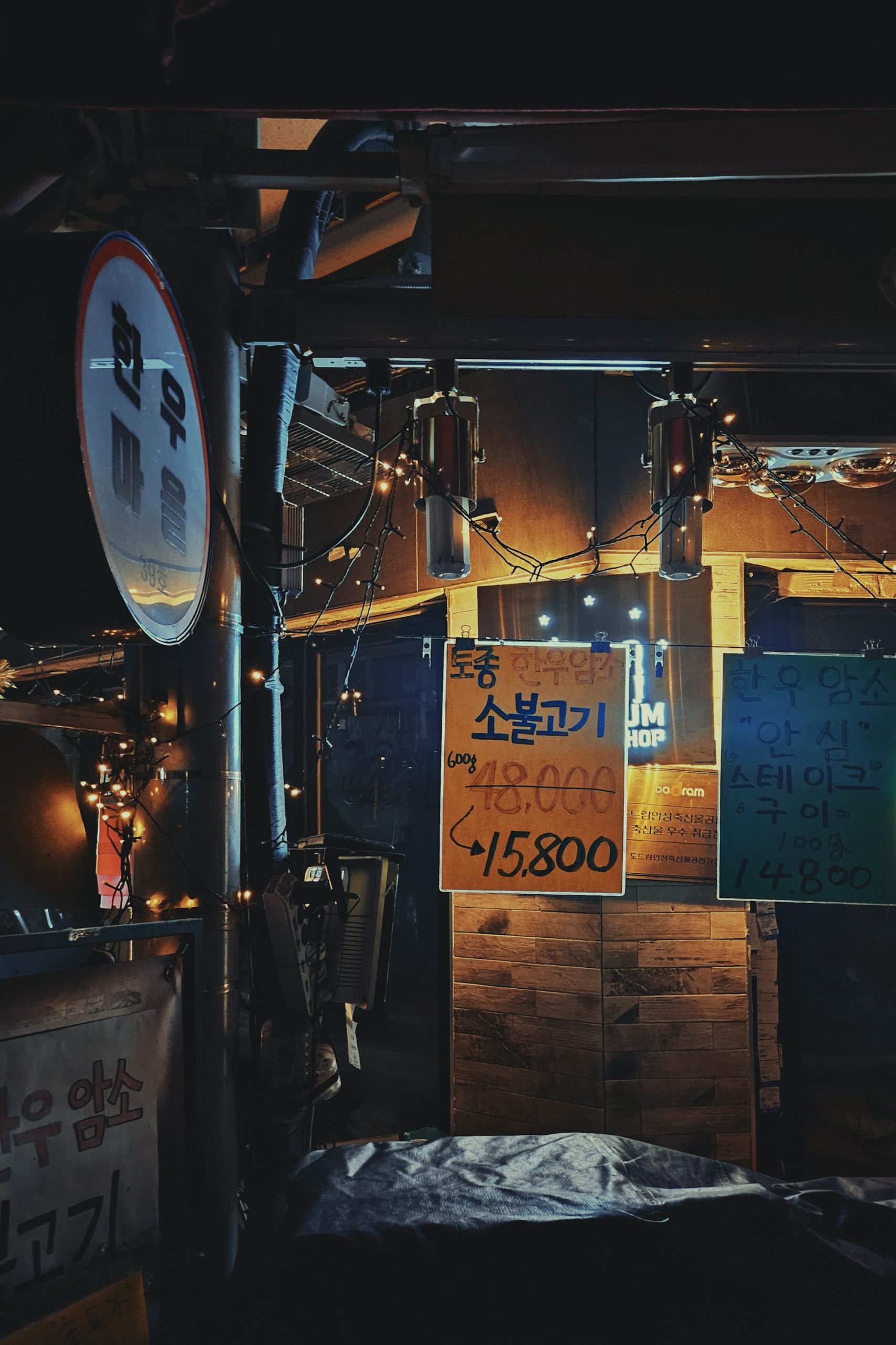
These are indicative numbers at roughly ₱0.046 to the won, which is about where it sat in September 2026, and the rate moves, so treat them as planning figures rather than quotes. Broadly, Korea sits below Japan and above Vietnam on cost. Food is where it’s most affordable: a proper kimchi jjigae set with banchan runs around ₩9,000 to ₩12,000, and the side dishes are refilled free.
Compare that with what we mapped out in our Japan trip cost guide and Korea usually comes in noticeably cheaper for the same number of nights, mostly because domestic transport costs a fraction of Japanese rail.
Seoul in Three Days, If That’s All You Have
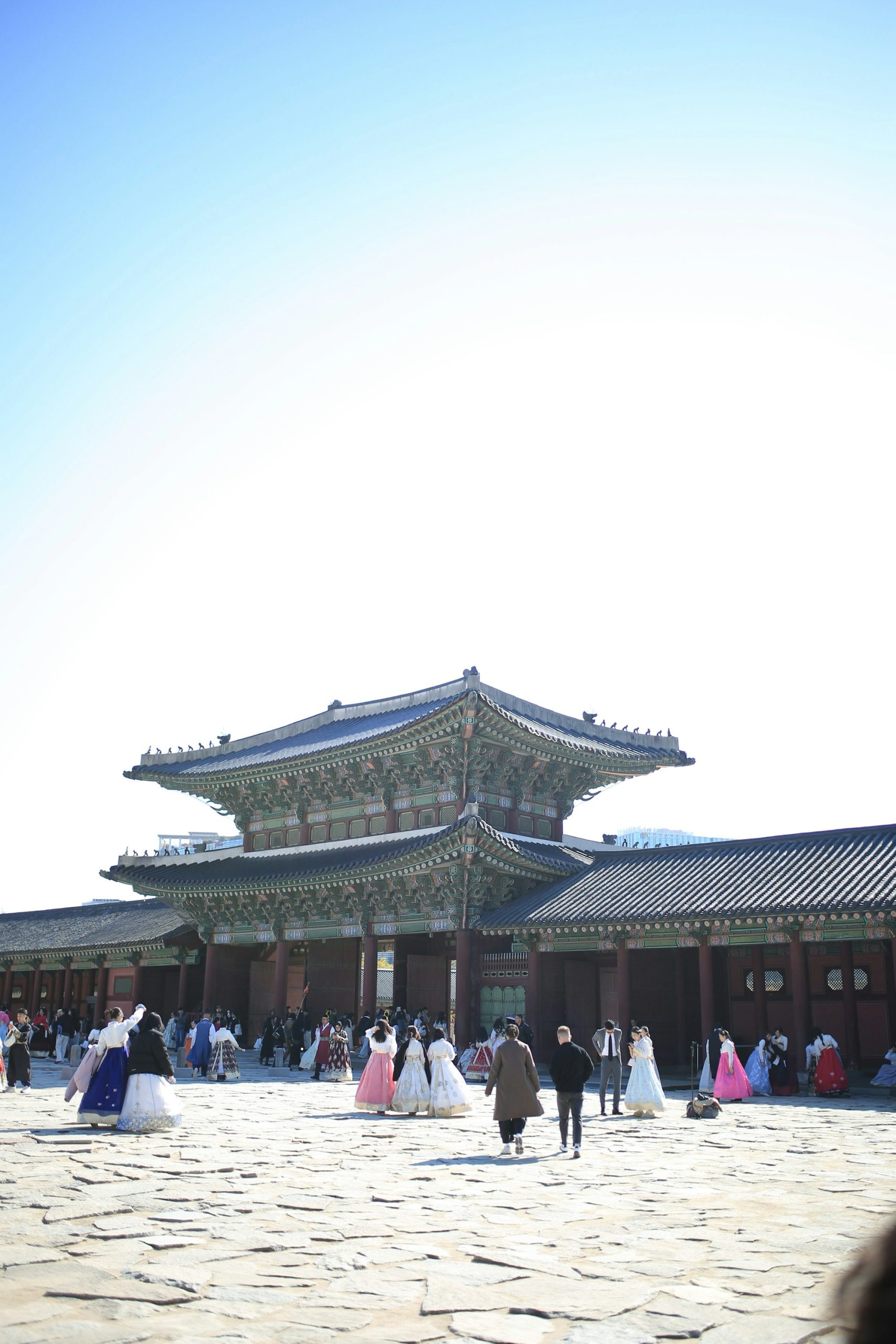
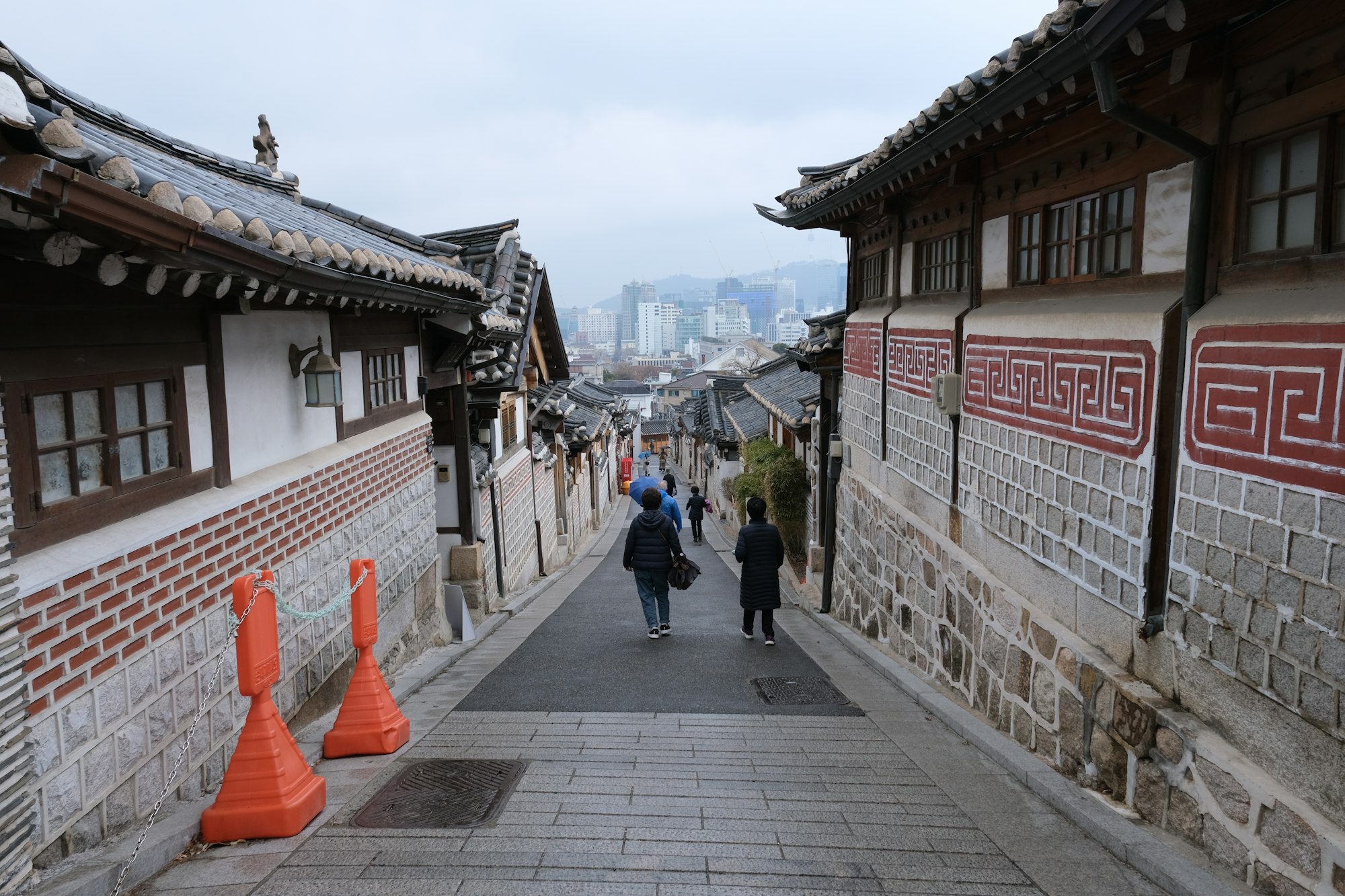
Day one, the old city. Gyeongbokgung Palace, entry around ₩3,000, and free if you arrive wearing hanbok, which is why you’ll see rental shops on every corner outside. Watch the changing of the guard, then walk to Bukchon Hanok Village and Insadong.
Day two, the modern city. Hongdae for the student energy and buskers, Myeongdong for skincare and street food, then N Seoul Tower on Namsan at sunset. Take the cable car up, walk down through the park if your knees allow.
Day three, pick a direction. Either Nami Island and Petite France as a day trip, about 90 minutes out, or the DMZ tour if history pulls you more than scenery. DMZ tours must be booked in advance and require your passport on the day.
That’s three days that don’t feel rushed. Add Busan or Jeju and you want at least six.
Jeju Island: The Visa-Free Option
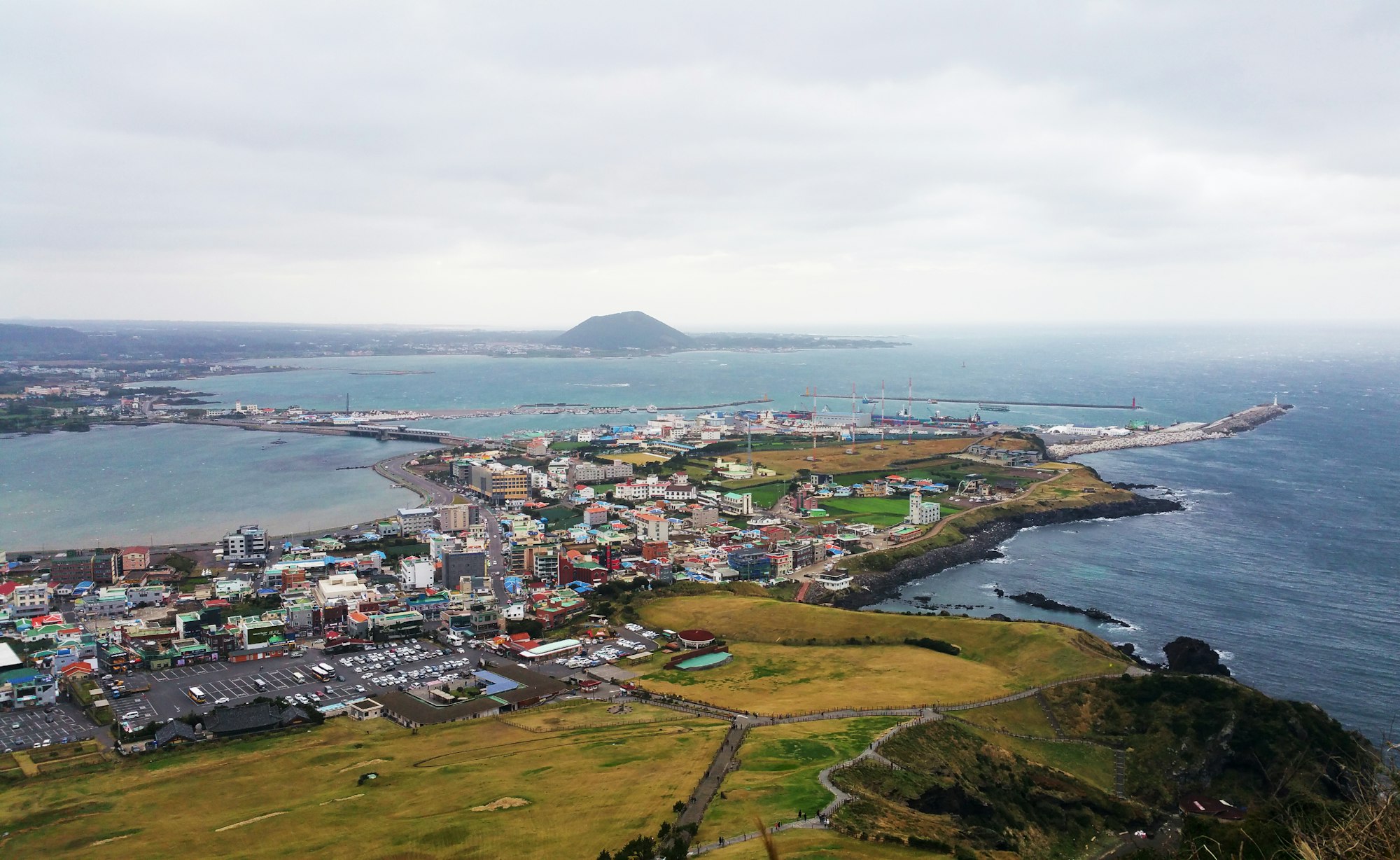
Jeju is a volcanic island off the southern coast, and for Filipinos it’s the easiest legal way into Korea. Direct flights, no tourist visa needed for tourism, and a landscape that has more in common with Palawan than with Seoul.
The headline sights are Seongsan Ilchulbong, a tuff cone you climb for sunrise, Hallasan, the country’s highest mountain, and a coastline of black basalt and green tea fields. The haenyeo, the free-diving women who harvest shellfish by hand, are a UNESCO-recognised tradition and still working.
Honestly? If you’ve spent time island hopping around El Nido, Jeju’s beaches will not be what impresses you. Go for the volcano, the food, the cafés and the fact that it’s Korea without the paperwork.
Six Things Filipino First-Timers Get Wrong
Assuming Google Maps will work. It won’t, not for walking directions. Naver Map or KakaoMap, downloaded before you fly.
Underestimating the cold. A Manila jacket is not a Seoul jacket. In December through February you need thermal base layers, a proper insulated coat, gloves and a beanie. Buy them here where they’re cheaper, not there.
Booking a hotel far from a subway line. Seoul is enormous. Ten minutes’ walk from a station sounds fine until it’s minus 5°C and raining.
Skipping travel insurance. Korean healthcare is excellent and expensive for non-residents. The same argument we make in our travel insurance guide holds here, doubly so in winter when slips and falls spike.
Not claiming the tax refund. Many shops offer immediate or airport tax refunds on purchases above a minimum amount. Keep receipts and your passport handy when shopping.
Over-scheduling. Korea rewards wandering. Some of the best hours you’ll have are in a café you didn’t plan to enter, watching it snow. Leave gaps.
Frequently Asked Questions
Can Filipinos travel to South Korea without a visa in 2026?
Only on specific routes. Jeju Island allows visa-free tourist entry on direct flights, and there are group tour arrangements through Muan and Yangyang airports with region restrictions and a stay limit of around 15 days. For Seoul and the rest of the country, you need a tourist visa.
Do Filipinos need a K-ETA?
No. The K-ETA is for visa-exempt nationalities, and the Philippines is not one of them. Filipinos apply for a standard short-term visit visa instead.
How much money should I show for a Korean tourist visa?
Since 20 February 2026 the three-month bank statement requirement has been waived for all applicants at the Philippine application centre, which changes this question significantly. Other proof of ties to the Philippines, such as employment or business documents, still matters. Always check the current KVAC checklist.
How many days do you need in South Korea?
Five days covers Seoul properly. Seven to eight lets you add Busan or Jeju without rushing. Three days is Seoul only, and it will feel tight.
Is South Korea expensive for Filipinos?
It sits between Southeast Asia and Japan. Food and public transport are affordable, accommodation in Seoul is the main cost, and shopping is where budgets quietly disappear. A mid-range five-day trip lands around ₱65,000 per person including airfare.
Is Seoul safe for solo female travelers?
Generally very safe, with low violent crime and reliable late-night public transport. Standard city precautions apply, particularly in nightlife districts.
What should I pack for a Korea trip?
Layers, always. Even in spring and autumn the gap between a 9am start and a 2pm afternoon can be ten degrees. In winter, thermal base layers do more work than one thick coat.
Let Us Handle the Paperwork
CMT Ticketing and Services arranges flights, visa assistance and organised group packages for Korea, which matters because several of the visa-free entry routes only work through accredited group tours. Message us on Facebook Messenger or WhatsApp with your dates and we’ll tell you honestly which route fits your situation, or browse our travel packages.
Still weighing Korea against somewhere else in the region? Our Japan travel guide for Filipinos covers the same ground for the other obvious contender, and the honest answer is usually Korea first, Japan second, because the visa is easier and the trip costs less.
[…] and, usefully, the one part of Korea most Filipinos can enter visa-free on a direct flight. Our South Korea travel guide for Filipinos explains how that route […]