
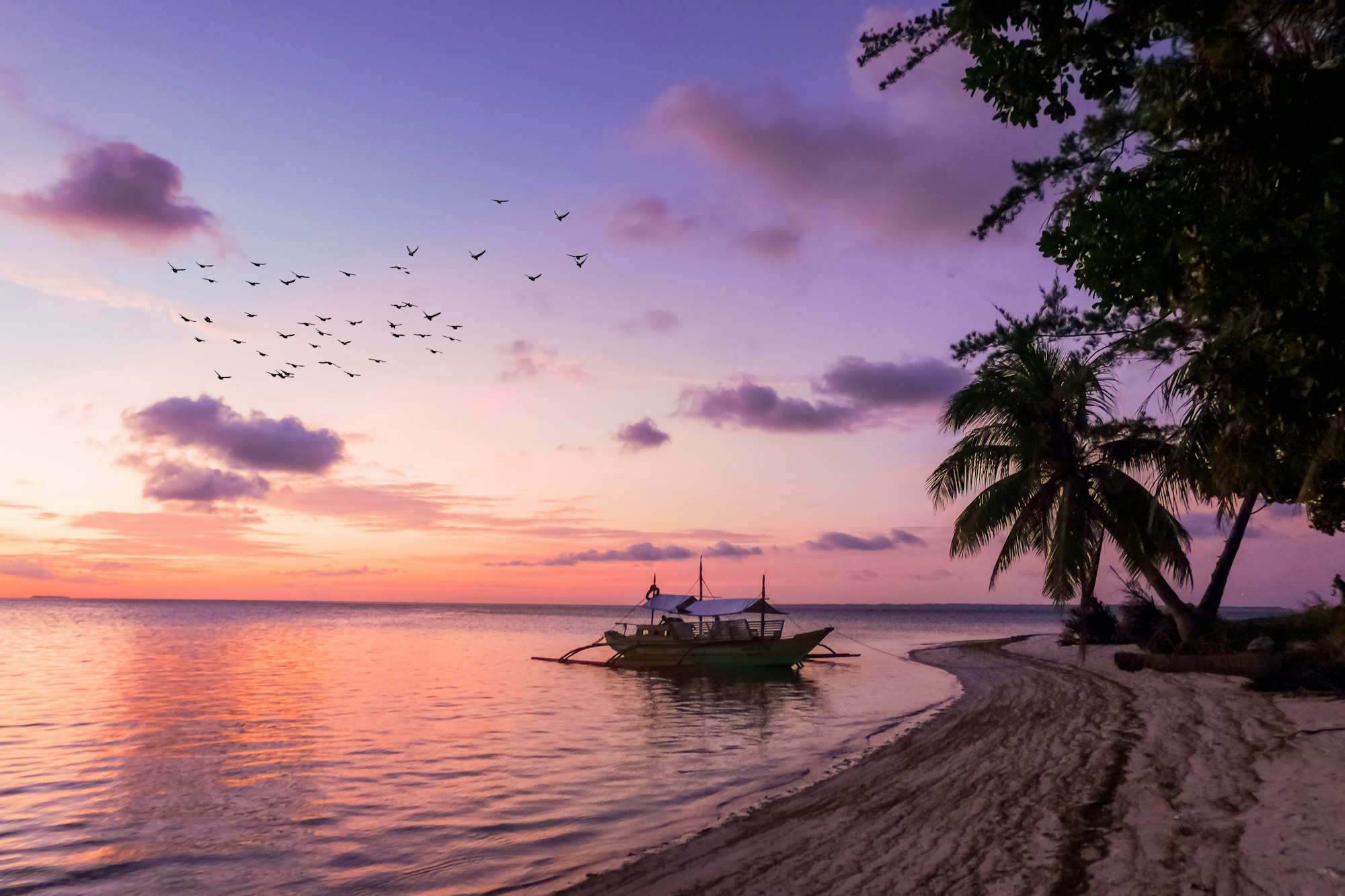
There’s no airport you can realistically fly into for a tourist trip. Getting to Balabac means stacking three legs back to back, and the whole thing eats the better part of a very long day.
Leg One: Fly to Puerto Princesa
Puerto Princesa is your gateway. Cebu Pacific and Philippine Airlines both run daily flights from Manila and Cebu, and fares typically land somewhere between ₱1,800 and ₱4,500 one way depending on how far ahead you book. Peak season around Christmas and Holy Week goes higher, sometimes a lot higher.
You’ll almost always need to overnight in Puerto Princesa, because the onward transfer leaves before dawn.
Leg Two: The Road South to Buliluyan
From Puerto Princesa you take a van roughly 200 kilometres south to Buliluyan Port in the municipality of Bataraza. Budget around 5 to 6 hours, sometimes more if the road is being repaired. Shared vans usually run about ₱500 to ₱600 per person and pull out around 4:00 AM.
It’s a long ride, but it’s one of the more interesting drives in Palawan. You pass through rice country, palm plantations, and small towns most tourists never see. Bring snacks. Options thin out fast after the first hour.
Leg Three: The Crossing
From Buliluyan you cross to Balabac by boat. Public passenger boats to Balabac town take roughly five hours and cost a few hundred pesos, but almost nobody on a tour takes them, because tour operators run their own transfers straight to the island camps instead. That crossing is open water, and it can get bouncy.
If you get seasick, take something before you board rather than after. Once you’re out there, you’re out there. Our full breakdown of routes and timings lives in the Balabac island travel guide, and if you’re still weighing Balabac against the north, the El Nido vs Coron comparison is a useful reality check on how much easier those two are logistically.
The Islands You’ll Actually See
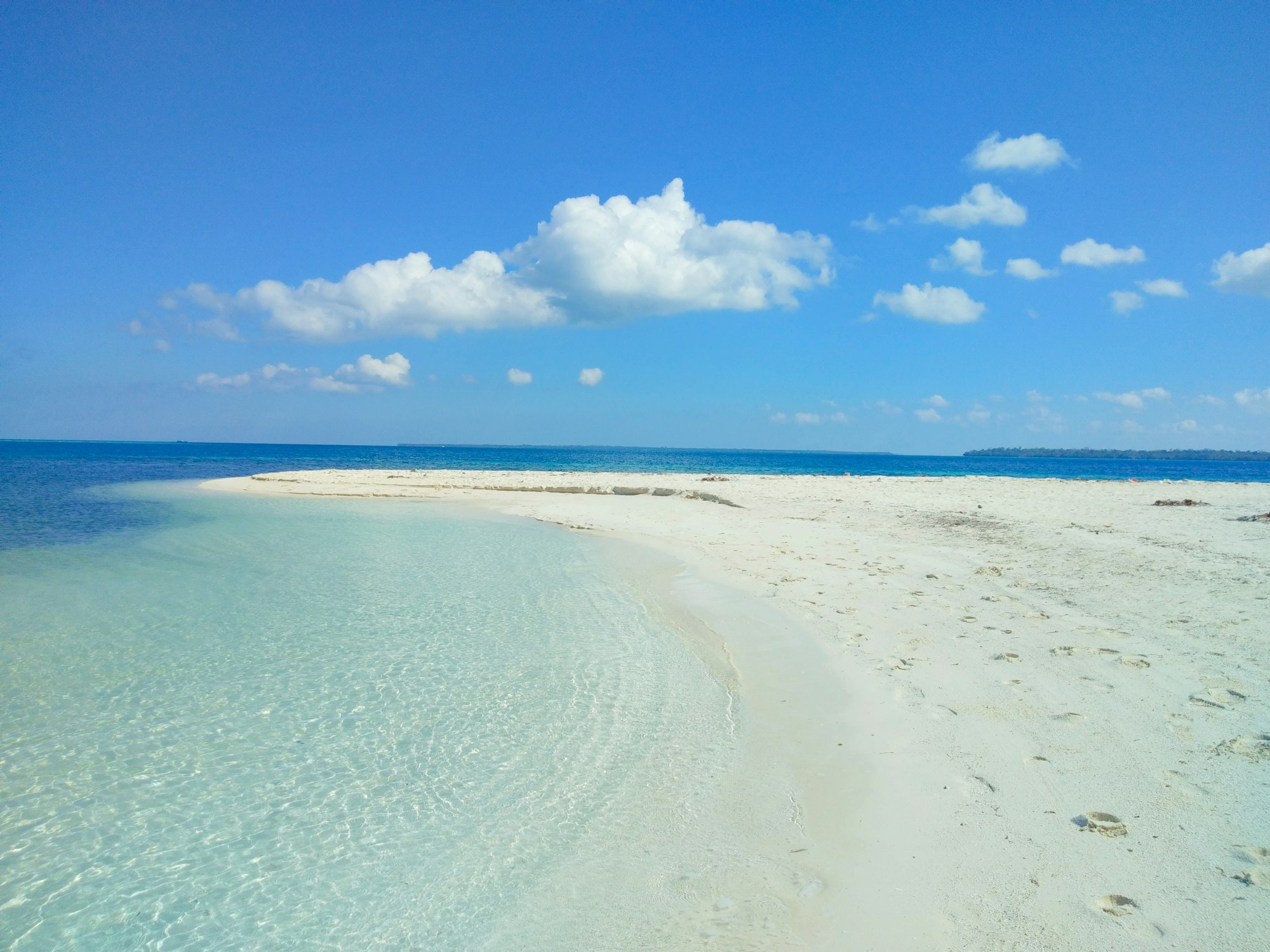
Most operators run a 3 to 5 day loop, and the stops shift with the tides and the wind. These are the ones that come up again and again.
Onuk Island
The famous one. Onuk (also spelled Onok) is privately managed, with stilt cottages standing over water so clear the shadow of the boat sits on the seabed below you. The sandbar shifts shape between visits. Most joiner packages include a day visit; overnight stays are limited and need to be arranged in advance. We wrote a full piece on it here: Onuk Island Balabac.
Punta Sebaring on Bugsuk Island
This is the one that quietly wins people over. Punta Sebaring sits on the southern tip of Bugsuk Island, and it’s frequently described as having one of the longest sandbars in the country. There’s an established campsite with solar lighting, which by Balabac standards counts as luxury.
Walking that sandbar at sunset, with nothing in any direction, is the moment most travelers say made the whole journey worth the effort.
Candaraman, Patawan, Canabungan and the Small Stops
These are the low-lying islets and sandbars between the bigger names. Patawan has a pale sandbar and a fringe of greenery. Canabungan has seagrass beds worth snorkelling over. Candaraman gets confused online with the pink sand island nearby, which we untangled in our guide to things to do in Balabac.
Insider tip: Ask your operator on day one which stops they’re targeting, then ask again each morning. A good guide adjusts based on tide and swell. If your guide gives you the same rigid list regardless of conditions, that’s a small warning sign about how they handle weather generally.
Where You Sleep, and Why It Matters More Than You Think
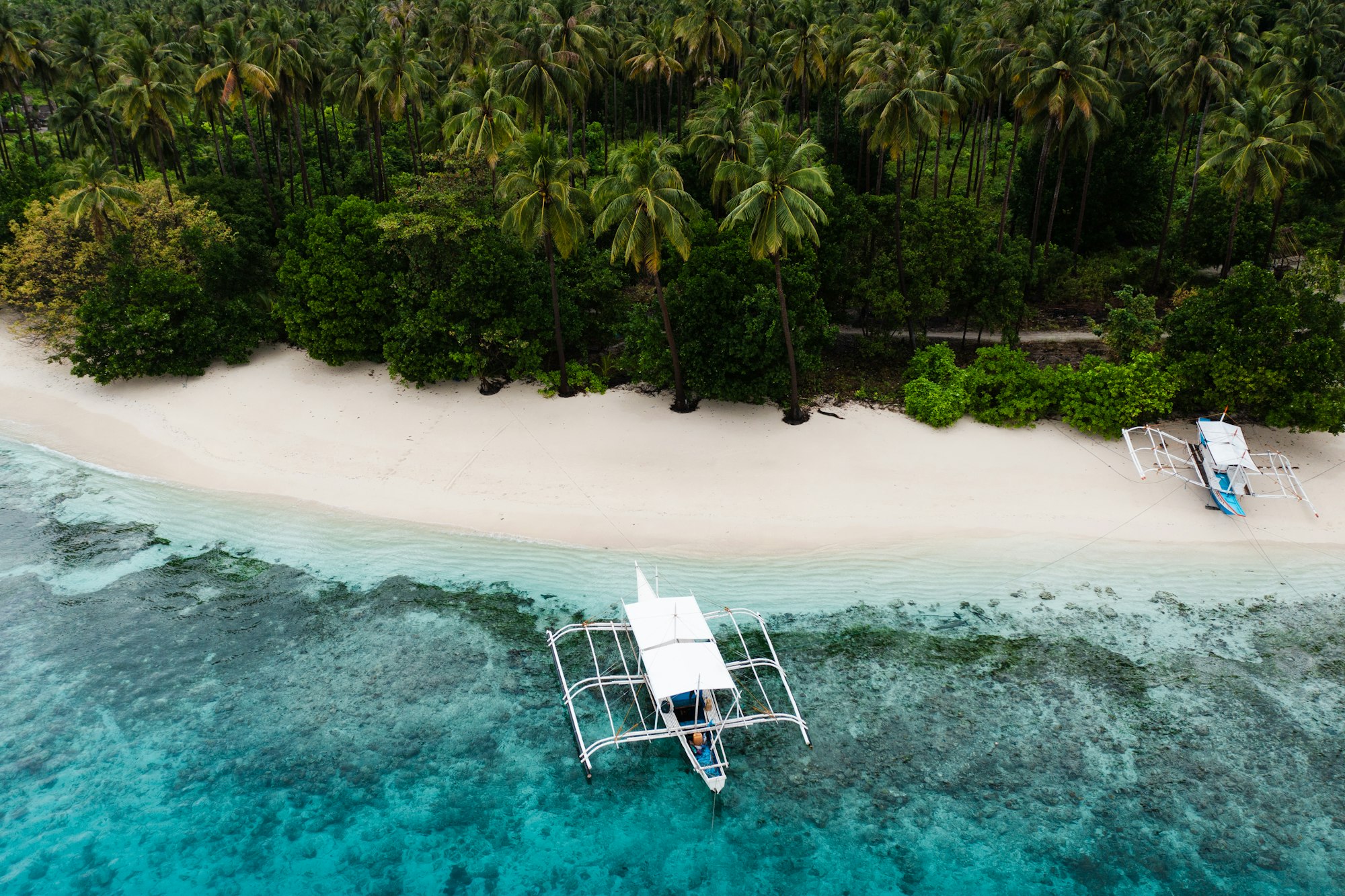
Accommodation in Balabac splits into three rough tiers, and the gap between them is bigger than the price difference suggests.
- Island camps: Nipa huts or tents on the beach, shared bathrooms, generator power in the evening. This is what most joiner packages include.
- Balabac town lodges: Basic rooms, sometimes with a fan and more consistent electricity. Useful as a first or last night.
- Onuk cottages: The over-water option, limited in number, booked well ahead and priced accordingly.
Nobody comes to Balabac for the beds. But there’s a real difference between a camp with proper mattresses and mosquito nets and one with a thin mat on plywood. Ask for photos before you pay. Any honest operator will send them.
If you want a wider view of your options across the province, our Palawan island hopping guide covers how the accommodation standard shifts from El Nido down to the far south.
What Balabac Costs in 2026
Balabac is not the cheap corner of Palawan. The distances, the fuel, and the tiny number of operators push prices well above El Nido rates. Here’s a realistic picture.
| Item | Approximate 2026 Cost (₱) | Notes |
|---|---|---|
| Manila to Puerto Princesa flight (one way) | 1,800 to 4,500 | Higher over Christmas and Holy Week |
| Puerto Princesa hotel (1 night, mid-range) | 1,200 to 2,500 | You will need at least one night |
| Shared van to Buliluyan Port | 500 to 600 | Departs around 4:00 AM |
| Balabac Eco-Tourism Development Fee | 400 | Valid roughly 10 days |
| 4D3N joiner tour package | 15,500 to 19,000 | Boat, camps, guide and most meals |
| Fuel surcharge (some operators) | 500 to 1,000 | Added by several operators during 2026 |
| Cash buffer for extras | 3,000 to 5,000 | No ATMs once you leave the mainland |
Realistically, a traveler flying in from Manila should plan for something in the region of ₱25,000 to ₱32,000 all in for a four-day Balabac trip. Private charters for small groups run higher again.
Insider tip: Withdraw every peso you’ll need in Puerto Princesa, and take it in small denominations. There are no ATMs on the islands, and handing a boatman a ₱1,000 note for a ₱150 purchase creates a problem for both of you. If you want the wider Palawan cost picture first, read Is Palawan expensive?
The Wildlife Side of Balabac
This is the part that surprises people. Balabac isn’t just pretty water, it’s biologically unusual.
The Philippine mouse-deer, known locally as the pilandok, is found in the wild only on Balabac and a couple of neighbouring islands like Bugsuk and Ramos. It’s about the size of a rabbit, nocturnal, extremely shy, and listed as endangered by the IUCN. You are unlikely to see one. But knowing it’s out there in the dark changes how the place feels.
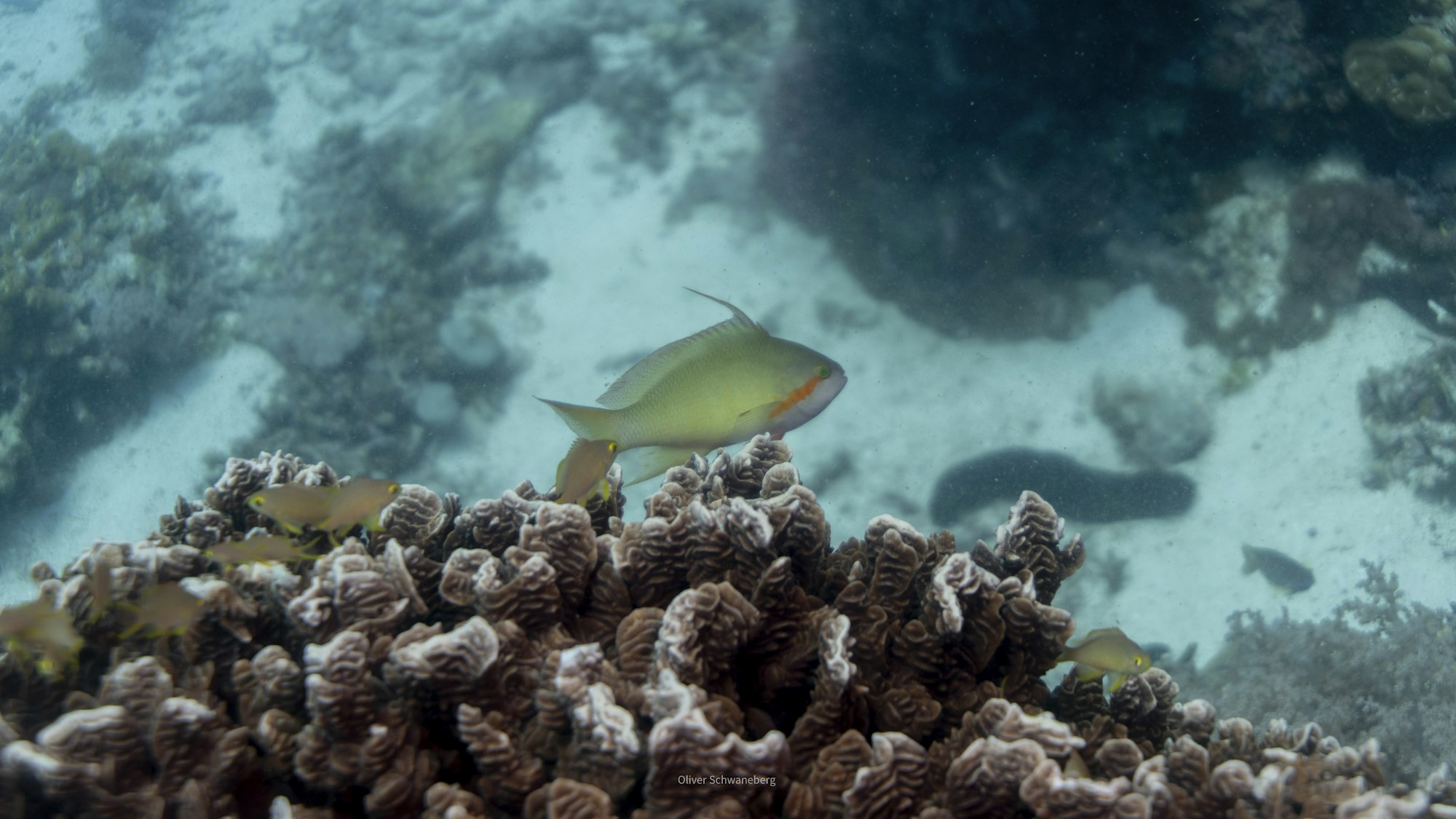
The seagrass meadows around the smaller islands also support dugongs, and sightings do get reported by boat crews, though they’re a matter of luck rather than something any operator can promise. Reef fish and healthy shallow coral are far more reliable, and the snorkelling on the outer stops is some of the least damaged we’ve seen in Palawan.
Which brings up the obvious responsibility. Don’t stand on coral. Don’t take shells. Use reef-safe sunscreen, which is now expected at most Palawan marine areas anyway. Our sustainable travel in Palawan guide goes into the practical detail.
There’s History Out Here Too
On Balabac Island itself stands the Cape Melville Lighthouse, a granite tower built by the Spanish to mark the Balabac Strait, the channel separating the Philippines from Malaysian Borneo. It was first lit on 30 August 1892 and is now a declared National Historical Landmark.
Getting to it takes effort and it isn’t on standard island hopping loops, so if you want to see it, say so at the booking stage rather than on the boat. Some operators can arrange it as an add-on when the weather cooperates.
How to Prepare: Gear, Health and Head Space
What to Actually Pack
Pack like you’re camping, not like you’re going to a resort. The essentials that people most often forget:
- A power bank, ideally two. Charging windows are short.
- A dry bag. Spray comes over the side of the boat constantly.
- Reef-safe sunscreen, a rash guard and a wide hat. Shade on the boat is limited.
- Water shoes for coral and rocky landings.
- Insect repellent with DEET or picaridin, plus long sleeves for evenings.
- Any medication you take, in quantities that cover an extra day or two of delay.
- Cash in small notes.
Our general Palawan packing list covers the basics, but Balabac needs a slightly more self-sufficient version of it.
Health and Safety
Southern Palawan is one of the few areas in the Philippines where malaria has not been fully eliminated, and Balabac falls within that zone. Reported cases on the small outer islands are rare, but the sensible move is to talk to a travel doctor before you go rather than to guess. Dengue is present across Palawan year round, so repellent matters regardless.
Beyond that, the risks are the ordinary ones: sun, dehydration, cuts from coral, and boat travel in changeable seas. Travel insurance that actually covers small-boat transfers is worth reading the fine print on. For general context, see Is Palawan safe? and check the Department of Tourism for any current advisories.
The Mental Part
Can you handle four days without signal, without a shower you’d call a shower, and with a schedule you don’t control? That’s the real question. People who go in expecting comfort come back frustrated. People who go in expecting an expedition come back saying it was the best trip they’ve taken in the Philippines.
When to Go
The window is narrow. Roughly November through May is the dry season, and March to May usually brings the calmest seas. June to October is the southwest monsoon, when crossings get cancelled often enough that most operators simply stop running Balabac trips.
Check PAGASA in the week before you travel, and read our best time to visit Balabac breakdown for a month-by-month view. Also sort your paperwork early using the Palawan travel requirements guide, because sorting anything out from a beach with no signal is not possible.
So Is Balabac Adventure Travel Right for You?
Go if you’ve done El Nido and Coron and found them busier than you wanted. Go if the phrase “no signal for three days” sounds like a feature. Go if you’re comfortable with plans that bend around the weather.
Skip it if you’re travelling with small children, if you need reliable connectivity for work, if you have limited mobility, or if you only have four days in Palawan total. In that last case El Nido gives you far more per day.
Balabac adventure travel asks more of you than anywhere else in Palawan. It also gives back more, in a currency of emptiness and silence that’s getting genuinely hard to find in this country. If that trade sounds right, it’s worth every hour of the journey.
Frequently Asked Questions
How many days do you need for Balabac?
Four days and three nights is the standard, and it works. Three days is tight once you account for travel. Five gives you a weather buffer, which is the smartest version of the trip.
Is Balabac safe for tourists?
Yes, when you travel with an accredited operator on established island hopping routes. The practical risks are weather, sun and sea conditions rather than anything else. Solo travelers generally join group departures rather than going independently.
Do I need a malaria tablet for Balabac?
That’s a call for a travel doctor, not a blog. Southern Palawan remains a malaria risk area, cases on the outer islands are rare, and prophylaxis depends on your health and your route. Ask before you fly.
Is there phone signal in Balabac?
Patchy in Balabac town, and usually nothing at all on the island camps. Tell people at home you’ll be uncontactable for a few days. Download offline maps and any documents before you leave Puerto Princesa.
Can you visit Balabac as a day trip?
No. The travel time alone rules it out. The minimum realistic trip is three days and nights from Puerto Princesa.
How much does a Balabac tour cost in 2026?
Joiner packages of four days and three nights typically run around ₱15,500 to ₱19,000 per person, with several operators adding a fuel surcharge of roughly ₱500 to ₱1,000. Add flights, a Puerto Princesa night and the ₱400 eco-tourism fee on top.
Is Balabac better than El Nido?
Different, not better. Balabac wins on emptiness and water clarity. El Nido wins on scenery variety, access, food and price. Plenty of travelers do both on one Palawan trip.
Ready to Plan Your Balabac Trip?
CMT Ticketing and Services handles the whole chain for Balabac adventure travel: Puerto Princesa transfers, the Buliluyan run, accredited boat operators and island camps, plus the buffer days that keep the trip from unravelling when the weather turns.
Message us on Facebook Messenger or WhatsApp and tell us your dates, and we’ll tell you honestly whether Balabac fits them. You can also browse our full Palawan travel packages or start with the easier north on our El Nido tours.